
All of our top picks
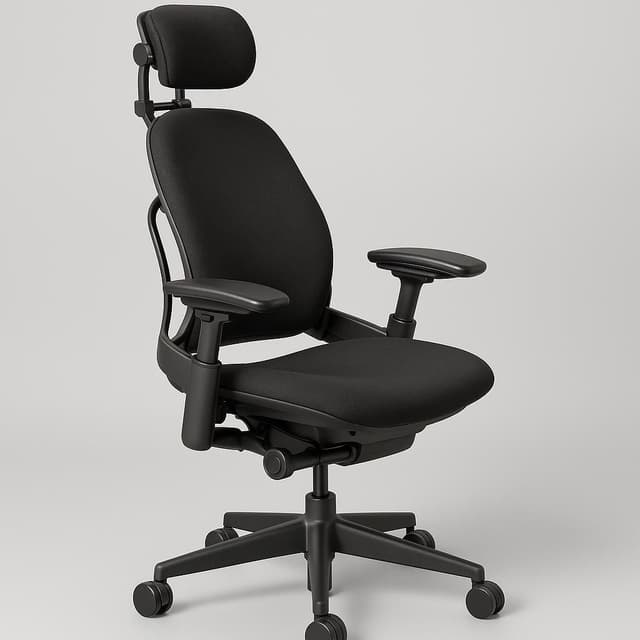
Best adaptive lumbar for marathon desk sessions
The Steelcase Leap V2 is the gold-standard ergonomic task chair for long workdays, delivering adaptive LiveBack lumbar support, best-in-class 4D adjustability, and a 12-year warranty. A strong refurbished market at $270–$450 makes it accessible across price tiers.

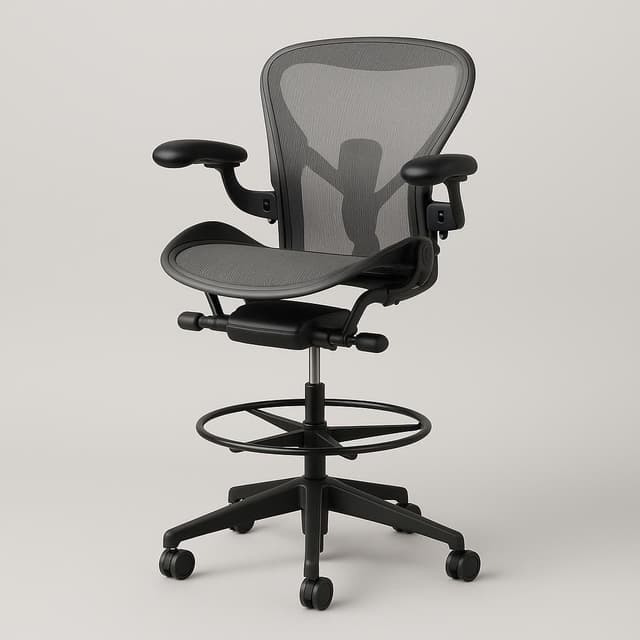
Best breathable mesh for all-day heat management
The Herman Miller Aeron Remastered is the category gold standard for long-workday ergonomics, combining the PostureFit SL dual lumbar pad system, breathable 8Z Pellicle suspension mesh, three size options, and an industry-leading 12-year warranty. At full retail it is a premium investment, but refurbished units provide strong value for serious buyers.
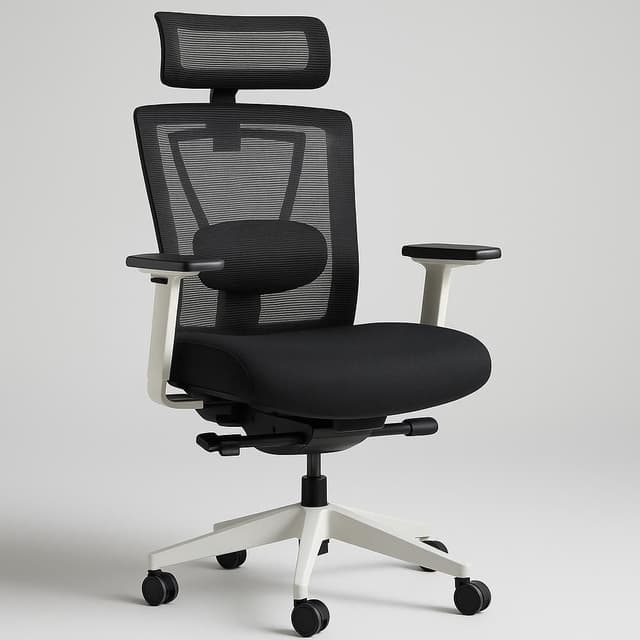
Best mid-market adjustability with built-in headrest
The Autonomous ErgoChair Pro is a well-adjustable mid-market mesh chair (4D armrests, adjustable lumbar cushion, headrest, 5-position recline) earning 4.0/5 from PCMag, but its plastic-heavy build, narrow seat height range (18–20 in), and cushion-only lumbar limit its appeal for tall users and those with chronic back pain.
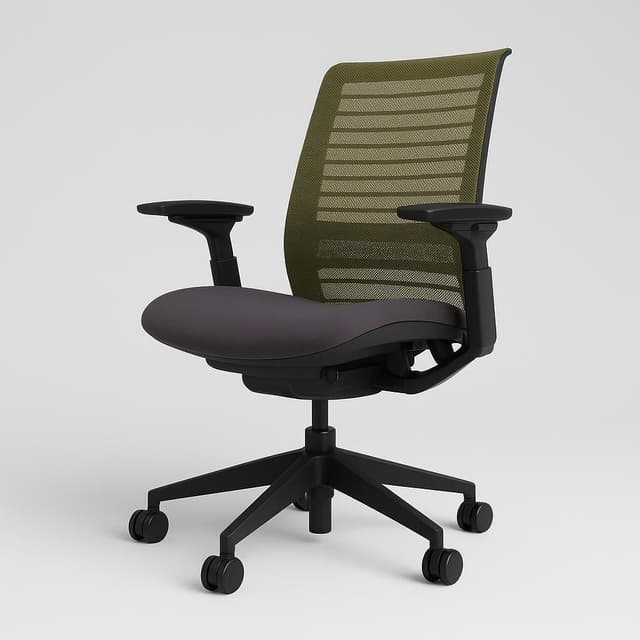
Best self-adjusting lumbar without manual tuning
The Steelcase Think 3D Knit is a durably built, intuitive ergonomic task chair with weight-activated recline and dynamic lumbar — ideal for average-to-large users wanting Steelcase quality at a lower price than the Leap or Gesture, though it trails class leaders on adjustability scores and lumbar tunability.
Who this is for
This guide is built for desk workers who spend the majority of their day seated — people for whom back discomfort isn't a minor inconvenience but a recurring, productivity-draining problem. If you're logging six, eight, or ten hours at a workstation and your current chair leaves you shifting positions every hour or reaching for a rolled-up towel to prop against your lower back, you're exactly the reader this roundup was designed for.
The defining requirement here is lumbar support that actually works — not a fixed foam bump molded into the backrest, but a named, adjustable mechanism that lets you dial in the height and depth of support to match your spine. Every chair in this guide was evaluated first on that criterion. If a chair couldn't demonstrate a dedicated, adjustable lumbar system validated by real long-term owners, it didn't make the list regardless of brand recognition or marketing claims.
This guide also serves buyers who are navigating a wide price range without a clear sense of what extra spending actually buys. The picks span roughly $350 (used) to $2,800, and the research was structured to answer that question honestly — where the meaningful ergonomic upgrades are, and where you're paying for materials or brand prestige rather than functional improvement. Whether you're outfitting a home office on a careful budget or justifying a premium chair to an employer, there's a pick calibrated to your situation.
Beyond lumbar support, the guide weighs the full breadth of ergonomic adjustability: seat depth, armrest range (including whether arms move in four directions or just two), recline tension, tilt lock, and height range. These details matter because ergonomics is personal — a chair that fits a 5'4" user well may be wrong for someone six inches taller. The specs and adjustment ranges in each pick are included so you can match a chair to your body before you buy, not after.
Durability is treated as a first-class criterion, not an afterthought. The research draws on multi-year owner feedback to surface chairs that hold up under daily use — and to flag models where early structural failures or degrading components show up consistently in community reports. A chair that feels excellent at six months but develops a wobbly base or collapsing lumbar by year two is not a good chair. Warranty length and parts availability factor into each recommendation for the same reason.
This guide is not for you if you're primarily a casual or part-time sitter who needs a chair for a few hours a week. In that case, a well-reviewed mid-range task chair without a specialized lumbar mechanism will likely serve you fine at lower cost. It's also not the right resource if you're drawn to gaming chairs — that category was excluded from consideration here because most gaming chairs market lumbar support as an add-on cushion rather than an integrated ergonomic mechanism, which doesn't meet the standard this guide holds.
When you reach the picks, use the adjustment specs and owner-validated feedback to narrow to one or two candidates before reading the full breakdowns. The best chair in this guide is the one that fits your body dimensions, matches your budget, and addresses the specific complaints — lower back fatigue, arm strain, seat edge pressure — that your current setup creates. The rankings reflect crowd-validated ratings of four stars or higher across hundreds of verified reviews, cross-referenced with expert editorial picks, so you're not relying on any single source's judgment.
How we picked the best
Our agents evaluated dozens of ergonomic office chairs by analyzing lumbar support mechanisms, owner-reported back comfort across years of daily use, and verified crowd ratings — then ranked each chair by how well it delivers for people sitting 8+ hours a day. Every pick was pressure-tested against real long-term user feedback and benchmarked for value within its price tier.
Lumbar Support Quality
The defining factor for all-day sitting: we assessed each chair's lumbar mechanism type, adjustability range (height, depth, firmness), and how consistently long-term owners report back pain relief after months of daily use. A chair that looks good on paper but fails real users over time didn't make the cut.
Ergonomic Adjustability
Seat depth, 4D armrest range, tilt tension, and recline lock determine whether a chair actually fits your body — not just an average one. We prioritized chairs with verified breadth of adjustment so diverse body types can dial in a truly personalized fit.
Crowd-Rating Validation
A 4-star average or higher across hundreds of verified long-term owner reviews is our baseline signal that a chair performs in the real world, not just in lab conditions. We weighted ratings from buyers who reported back on durability and comfort after a year or more of use.
Build Quality & Durability
Frame materials, caster construction, and mesh or foam longevity reveal whether a chair holds up after years of daily use — and whether it justifies its price over time. Multi-year owner feedback was the primary lens here, not manufacturer claims.
Price-Tier Value
We evaluated each chair against others in its price tier ($200–$400 entry, $400–$800 mid-range, and premium above $800) to identify which delivers the highest lumbar and ergonomic performance per dollar spent. The best pick at each tier outperforms its direct competitors on the criteria that matter most for long workdays.
Steelcase Leap V2
The Steelcase Leap V2 is the gold-standard ergonomic task chair for long workdays, delivering adaptive LiveBack lumbar support, best-in-class 4D adjustability, and a 12-year warranty. A strong refurbished market at $270–$450 makes it accessible across price tiers.
 Top Pick
Best adaptive lumbar for marathon desk sessions
Steelcase Leap V2
Key specs
| Recline | Natural Glide System — forward/back recline with adjustable tilt tension |
| Warranty | 12-year, 3-shift |
| Armrest Type | 4D (height, width, depth, pivot) |
| Lumbar Support | Height-adjustable, self-adjusting LiveBack backrest |
| Weight Capacity | 400 lbs |
| Material Options | Fabric, leather, mesh back variants |
| Seat Height Range | Pneumatic, standard range (~15.5"–20.5") |
| Seat Depth Adjustment | Yes (slidable seat) |
Highlights
- LiveBack technology dynamically adapts backrest to natural spine movement
- Height-adjustable lumbar support relieves chronic back pain across body types
- 4D armrests (height, width, depth, pivot) — among the most adjustable in class
- Natural Glide System recline encourages active sitting and reduces spinal load
- Seat depth slider accommodates wide range of torso/leg proportions
- Industry-leading 12-year, 3-shift warranty; chairs commonly last 10–15+ years
- 400 lb weight capacity — strong size inclusivity
- Robust refurbished market offers excellent value at $270–$450
Worth knowing
- New retail price ($1,499+) is premium tier
- Fabric/foam seat pan — runs warmer than full-mesh seat competitors
- Many adjustments create a learning curve to dial in correctly
- Back height is not adjustable (lumbar pad adjusts within fixed backrest)
- No integrated headrest on standard model
- Substantial size and weight — not ideal for small workspaces
What people are saying
“The Leap by default includes an adjustable lumbar support so you can really dial in the exact spot based on the curve of your back and it also has an additional knob to adjust the firmness of the lower back support for that added customization”
“When you recline the back on the Leap, the seat pan moves forward which I find comfortable since it keeps the lumbar support in the same spot on my back”
“I'm leaning slightly to the Leap V2 based on my initial testing because I find it slightly more comfortable”
Herman Miller Aeron Remastered
The Herman Miller Aeron Remastered is the category gold standard for long-workday ergonomics, combining the PostureFit SL dual lumbar pad system, breathable 8Z Pellicle suspension mesh, three size options, and an industry-leading 12-year warranty. At full retail it is a premium investment, but refurbished units provide strong value for serious buyers.
 Runner Up
Best breathable mesh for all-day heat management
Herman Miller Aeron Remastered
Key specs
| Brand | Herman Miller |
| Sizes | A (petite), B (medium), C (large) |
| Style | Modern |
| Weight | ~41 lbs |
| Recline | Tilt with tilt tension control and forward tilt option |
| Armrests | Adjustable (multi-directional) |
| Leg Type | Caster, Multi-Surface Caster with Quiet Roll |
| Warranty | 12 years |
Highlights
- PostureFit SL independently supports both sacrum and lumbar — proven effectiveness for long sessions
- 8Z Pellicle suspension distributes weight across 8 tension zones with maximum airflow
- Three sizes (A/B/C) support body inclusivity up to 350 lbs
- 12-year warranty — strongest in category
- Refurbished/pre-owned options available from ~$599
- BIFMA Level 3 certified, recycled-material construction
- Consistently top-ranked across expert editorial roundups (Forbes, CreativeBloq, Wirecutter)
Worth knowing
- Full retail price ($2,045+) is among the highest in the category
- Entry-level Aeron configurations have fewer adjustment options
- No foam cushion — suspension seat may not suit all preferences
- Limited color options on standard models
- Higher adjustment learning curve than simpler chairs
What people are saying
“Their newest Aeron, their remastered Aeron, where those armrests are probably the best in the business for a stock chair. They are super soft, very supple, and you can rest them there.”
“Herman Miller does this like nobody else in the industry. From every chair that I tested, no one has been able to replicate this kind of edge bending flexible material.”
“This lumbar pad... it's just a stiff piece of plastic that just runs kind of this bottom area of the chair. And a lot of people have noted that it doesn't feel the best.”
Autonomous ErgoChair Pro
The Autonomous ErgoChair Pro is a well-adjustable mid-market mesh chair (4D armrests, adjustable lumbar cushion, headrest, 5-position recline) earning 4.0/5 from PCMag, but its plastic-heavy build, narrow seat height range (18–20 in), and cushion-only lumbar limit its appeal for tall users and those with chronic back pain.
 Alternate Angle
Best mid-market adjustability with built-in headrest
Autonomous ErgoChair Pro
Key specs
| Brand | Autonomous |
| Color | Chair Color: Cool Gray / Seat Material: Cool Mesh |
| Style | Modern |
| Width | 29 in |
| Height | 50 in |
| Length | 29 in |
| Recline | Up to 20°, 5 lockable positions |
| Armrests | 4D (height, slide forward/back, side-to-side, rotation) |
Highlights
- Extensive 4D adjustability across armrests, lumbar, headrest, and seat depth
- Breathable full-mesh back prevents heat buildup in long sessions
- Adjustable lumbar cushion reduces minor back fatigue for general office users
- Competitive price point (~$499) for the adjustability feature set
- Easy assembly with all tools and spare hardware included
- 300–350 lb weight capacity supports broader user range
Worth knowing
- Plastic-heavy construction with 2-year warranty excluding normal wear — durability concern
- Narrow seat height range (18–20 in) unsuitable for users over ~6 ft
- Lumbar is a cushion, not an integrated/self-adjusting system — less adaptive than premium chairs
- Armrests lack a locking mechanism, causing unwanted movement
- Dense foam seat retains heat; mesh seat suspension would be preferable
- Quality control inconsistencies reported (loose lumbar cushion, mis-threaded nuts)

Steelcase Think 3D Knit
The Steelcase Think 3D Knit is a durably built, intuitive ergonomic task chair with weight-activated recline and dynamic lumbar — ideal for average-to-large users wanting Steelcase quality at a lower price than the Leap or Gesture, though it trails class leaders on adjustability scores and lumbar tunability.
 Worth a look
Best self-adjusting lumbar without manual tuning
Steelcase Think 3D Knit
Key specs
| Brand | Steelcase |
| Color | Black |
| Material | Mesh |
| Warranty | Limited lifetime |
| Arm Width | 14" - 21.25" |
| Tilt Lock | Yes |
| Seat Depth | 15.5" – 18" |
| Seat Width | 20.25" |
Highlights
- Lifetime warranty and rock-solid Steelcase build quality
- Highly adjustable 4D armrests with wide range
- Seat pan depth adjustment for leg-length customization
- Weight-activated recline — no manual tilt tension setup needed
- Dual-energy lumbar self-adjusts dynamically with posture shifts
- Supports up to 400 lbs — strong size inclusivity
- ~7 hours of expert-tested comfortable use
- Assembles in ~1 minute
Worth knowing
- Lumbar aggressiveness is not manually adjustable (firmness is fixed)
- Limited recline tension control compared to competitors
- Less comfortable for petite or small-framed users
- Ranked #8 of 18 in TechGearLab ergonomic roundup (score: 71/100)
- Premium street pricing (~$1,100) competes with higher-scoring chairs
What people are saying
“As soon as the problem started, I feel like it went downhill really quick… it snowballed.”
“I have nearly fully disassembled the chair and rebuilt the damn thing with lithium grease and everything where you're supposed to do it. Has not made a single difference.”
“It's like a $1,600 chair”
Notable mentions
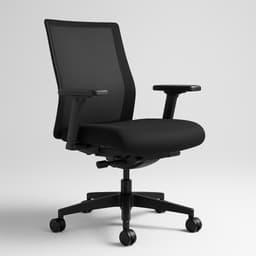
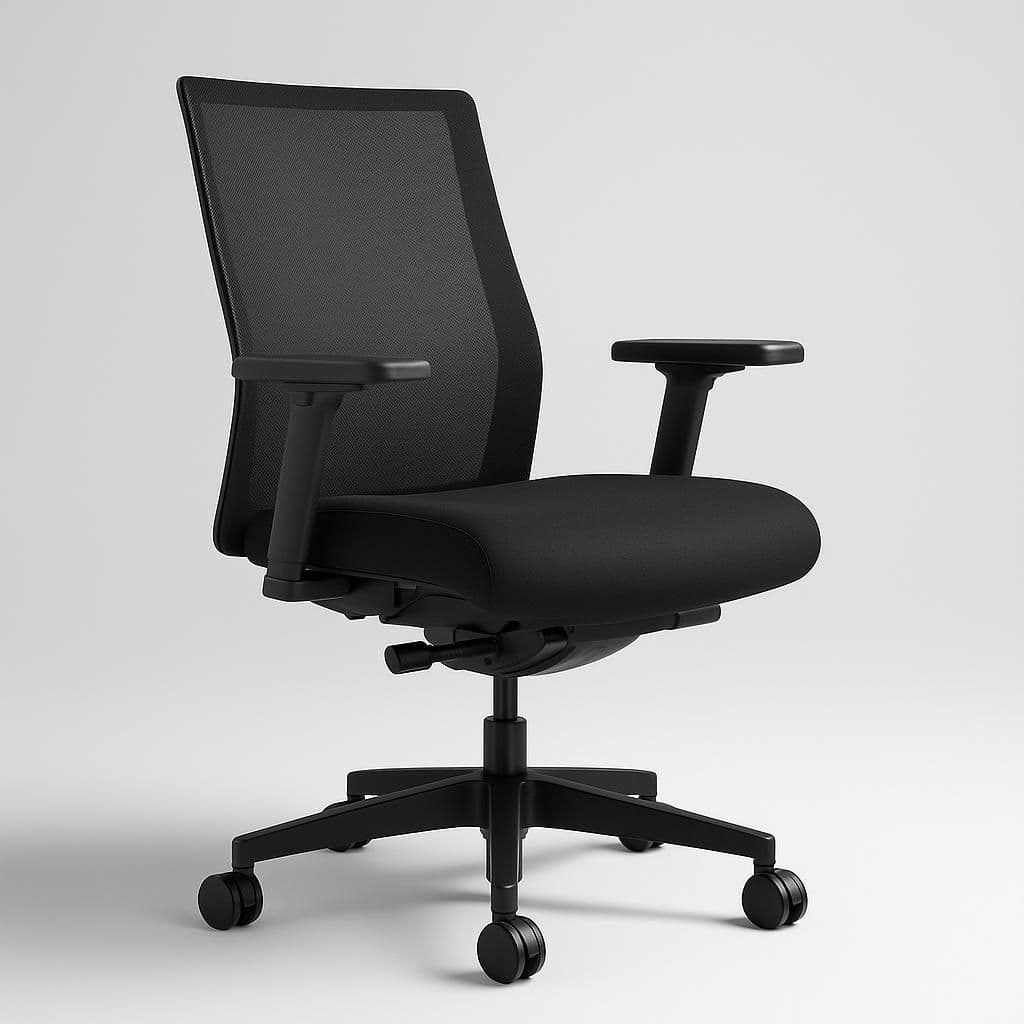
HON Ignition 2.0 Mid-Back Task Chair Black
The HON Ignition 2.0 is a solid BIFMA-certified ergonomic task chair in the $400–$500 range with adjustable lumbar support, synchro-tilt, seat depth adjustment, and a 7-year warranty — delivering professional-grade comfort at a mid-range price, though 2D (not 4D) armrests and no mesh seat option limit it vs. premium competitors.
- Adjustable lumbar support praised by multiple reviewers for improving posture during long workdays
- Synchro-tilt mechanism with 20° recline accommodates both active and relaxed sitting


Sihoo M18 Ergonomic Office Chair
eBay — $147

Steelcase Gesture Chair
Wayfair — $1,516Key spec comparison
How the top picks compare
Side-by-side scores on the dimensions that mattered for this search.
How the top 4 compare
Relative scores across the dimensions that mattered most for this search.
Steelcase Leap V2
Herman Miller Aeron Remastered
Autonomous ErgoChair Pro
Steelcase Think 3D Knit
Price vs. Warranty Length (years)
How price changes against warranty length (years) for lumbar support effectiveness for all-day sitting.
Top pick
Other top options
What to know before buying
What is the best ergonomic office chair for lumbar support if I sit 8+ hours a day?
The Steelcase Leap V2 is the best choice, scoring 98/100 for lumbar support. Its LiveBack backrest self-adjusts to every posture shift without any manual tuning.
Steelcase Leap V2 vs Herman Miller Aeron Remastered — which is better for all-day sitting?
The Steelcase Leap V2 wins on lumbar support (98 vs 85) and adjustability (97 vs 83), but the Herman Miller Aeron Remastered is superior for breathability (99 vs 62) if you run hot.
Does the Steelcase Leap V2 get hot to sit in because it doesn't have a mesh seat?
Yes — the Steelcase Leap V2's fabric-and-foam seat pan scores only 62/100 for breathability. If heat is a concern, the Herman Miller Aeron Remastered's 8Z Pellicle suspension mesh is the best alternative.
Is the Autonomous ErgoChair Pro good enough for people with chronic back pain?
No — the Autonomous ErgoChair Pro scores only 58/100 for lumbar support and uses a cushion, not an integrated system. People with chronic back pain should choose the Steelcase Leap V2 instead.
Are refurbished ergonomic chairs like the Steelcase Leap V2 worth buying?
Yes — refurbished Steelcase Leap V2 units sell for $300–$450 versus $1,499+ new, and the chair's 12-year warranty and 10–15 year lifespan make it one of the strongest long-term values available.
Skip this one
Not worth it
HON Ignition 2.0 Mid-Back Task Chair Black
The HON Ignition 2.0 is a solid BIFMA-certified ergonomic task chair in the $400–$500 range with adjustable lumbar support, synchro-tilt, seat depth adjustment, and a 7-year warranty — delivering professional-grade comfort at a mid-range price, though 2D (not 4D) armrests and no mesh seat option limit it vs. premium competitors.
- Armrests are 2D only (height + in/out) — no 4D pivot or fore/aft slide
- No mesh seat pan option; fabric/vinyl only may run warmer
- Lumbar support height range doesn't reach upper back for taller users
- Full customization (fabric, color, headrest) may require authorized dealer visit
Related reports


Sources reviewed
322 sources checked across 25 products. Showing non-retail research links from the canonical report payload.
Official pages
- Boulies Official (boulies.com)
- Herman Miller Official Store (store.hermanmiller.com)
- Official product page (steelcase.com)
- Official product page (hermanmiller.com)
- Official product page (autonomous.ai)
- Official product page (steelcase.com)
- Official product page (hon.com)
- Official product page (emiah.com)
- Official product page (steelcase.com)
- Official product page (branchfurniture.com)
- Official product page (haworth.com)
- Official product page (ergohuman.com)
- Official product page (hermanmiller.com)
- Official product page (humanscale.com)
- Official product page (hermanmiller.com)
- Official product page (boulies.com)
- Official product page (sihoooffice.com)
- Official product page (hermanmiller.com)
- Official product page (sihoooffice.com)
- Official product page (flokk.com)
- Official product page (flexispot.com)
- Official product page (flokk.com)
- Official product page (tomsguide.com)
- Sihoo Official (sihoooffice.com)
Reviews and articles
- Expert Reviews (expertreviews.co.uk)
- Judge.me Reviews (judge.me)
Videos and social
- 2026 is the year of comfort (instagram.com)
- 5 years with the @autonomousdotai ErgoChair Pro and it's still ... (instagram.com)
- At the core of S1 lies our signature Unique 3D Knit (instagram.com)
- Brand: Steelcase Product Name: Leap (instagram.com)
- Brand: Steelcase Product Name: Series 1 (instagram.com)
- Brand: Steelcase Product Name: Think 3D Knit Features ... (instagram.com)
- Comprehensive Review of the Best Office Chair (tiktok.com)
- De-influenced: Choosing the Right Office Chair (tiktok.com)
- ErgoChair Pro by Autonomous - Ultimate Comfort for Your ... (tiktok.com)
- Explore Limitless Possibilities with the Steelcase Think ... (instagram.com)
- Herman Miller Aeron Chair Remastered Mineral Polished ... (instagram.com)
- Herman Miller Aeron Chair: The Ultimate Office Investment (tiktok.com)
- Herman Miller Aeron Remastered: Sizes A, B, and C (tiktok.com)
- Herman Miller Aeron: Ideal Chair for Gaming and Worksetups (tiktok.com)
- HON Ignition 2.0 Mid Back Task Chair, Advanced Synchro-Tilt ... (instagram.com)
- HON Ignition Mesh Mid-Back Task Chair ... (instagram.com)
Showing 42 research links; 224 additional non-retail links remain in the source data.