
All of our top picks
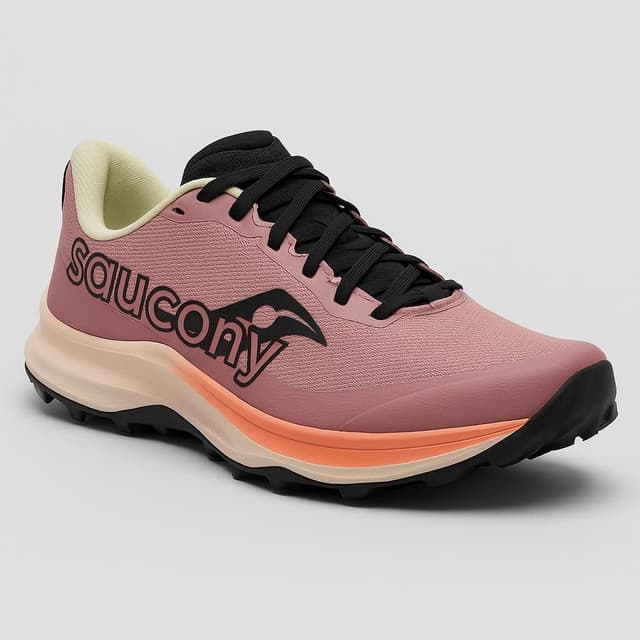
Best grip on wet, muddy technical trails
The Saucony Peregrine 16 is a trusted, low-profile trail shoe with an upgraded Vibram Megagrip outsole and improved midsole stack, delivering reliable traction on wet, muddy, and technical terrain at a competitive $149.95 price point. It excels as a versatile all-rounder for mixed-terrain runners but lacks a dedicated stiff rock plate for ultra-rocky courses.
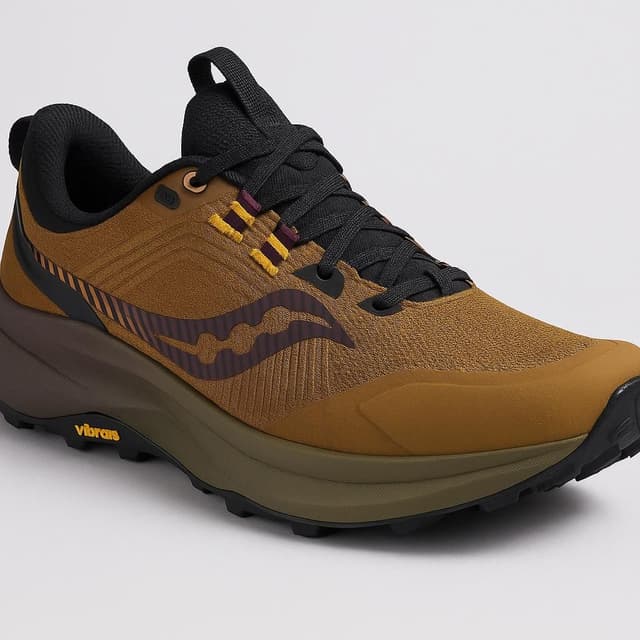
Best for ultra-distance mountain trail running
The Saucony Xodus Ultra 4 earns an 88/100 from RunRepeat for combining a class-leading Vibram MegaGrip outsole with a bouncy PWRRUN PB midsole — the best version yet for ultra-distance trail runners, though its heavier build and heel padding durability concern are notable trade-offs.
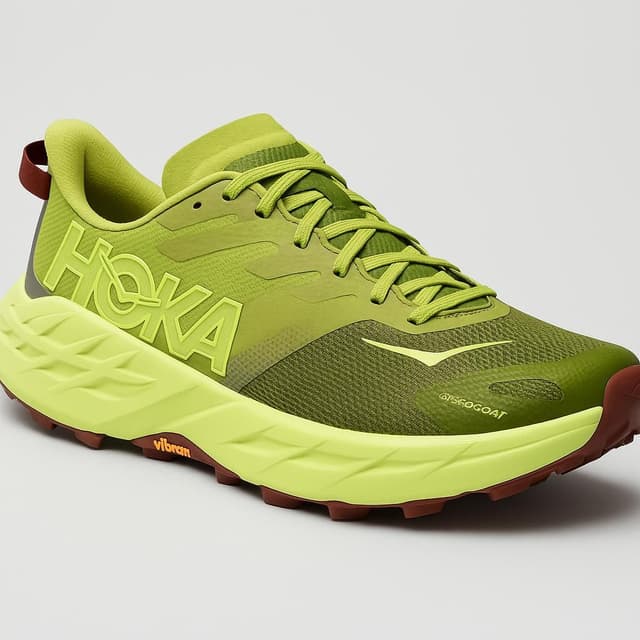
Best cushioning for long mixed-terrain training
The Hoka Speedgoat 7 is a top-tier all-around trail shoe excelling in traction, cushioning, and durability for ultras and long training runs on moderate to mixed terrain. The absence of a rock plate and narrow toebox are its primary limitations for technical mountain running.
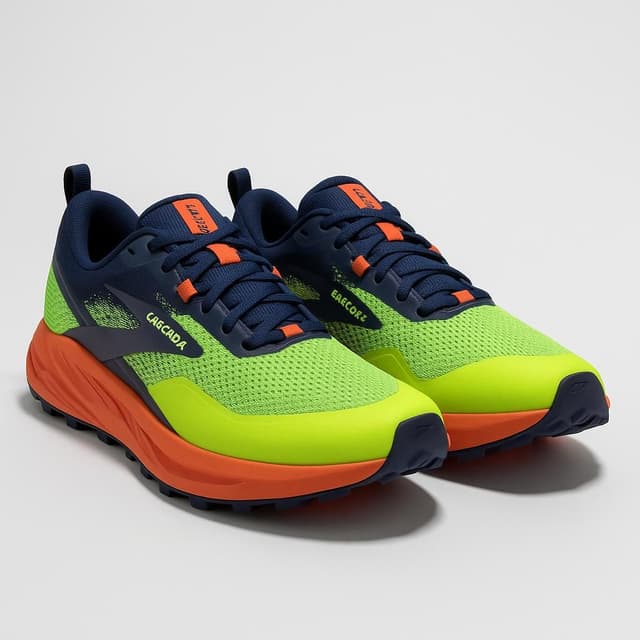
Best protection on rocky, rooted technical trails
The Brooks Cascadia 17 is a durable, stable trail workhorse with excellent grip (TrailTack Green), solid rock plate protection, and strong breathability — best for moderate-pace technical trail running and hiking crossover, but too heavy and firm for racing or ultra-distance efforts.
Who this is for
This guide is for trail runners who are tired of vague recommendations and want to know exactly why one shoe outperforms another on wet roots, loose gravel, or muddy switchbacks. Whether you're logging ultras in the mountains or running technical singletrack on weekends, the shoes in this guide were evaluated against the variables that actually determine trail performance — not just comfort on a showroom floor.
Trail running shoes are a genuinely difficult category to buy well. The marketing language is dense, the spec sheets are inconsistent, and a shoe that excels on hardpack can be dangerous on wet rock. The core tradeoffs — grip versus weight, cushioning versus ground feel, protection versus flexibility — don't resolve themselves neatly, and the right answer depends heavily on the terrain you run and the distances you cover. This guide is built around those tradeoffs, not around brand reputation or retail availability.
The three variables we focused on are grip and traction, rock plate protection, and cushioning relative to distance and terrain intensity. Lug depth, lug pattern, and rubber compound are the defining performance variables for trail shoes — they determine whether you hold your line on a wet descent or lose it. We evaluated outsole grip specifically on wet rock, mud, and loose gravel, because those are the surfaces where shoe choice actually changes outcomes. A shoe that only performs on dry dirt is a road shoe with a costume.
Rock plate quality matters just as much for technical terrain. A stiff plate protects your forefoot from sharp rocks on aggressive trails but can deaden ground feel on smoother surfaces. We looked at both plate presence and stiffness, because a thin or poorly positioned plate offers false confidence. Cushioning adds another layer of complexity: the right stack height for a 50-mile ultra is not the right stack height for a fast 10K on technical trail, and foam type affects both energy return and durability over hundreds of miles.
Before you use these picks, it helps to know what we ruled out. Road running shoes — even those marketed as trail-capable — are not in this guide. Neither are lifestyle or hiking shoes that borrow trail-running aesthetics without purpose-built lug outsoles. We also excluded any model with widespread early outsole delamination reports, regardless of how well it performed otherwise. Durability is part of the value equation, and a shoe that falls apart at 200 miles is not a trail running shoe worth recommending.
If you run exclusively on groomed paths, fire roads, or packed gravel, a trail-specific shoe may be more shoe than you need — a road shoe with mild traction or a hybrid trainer will likely serve you better and last longer. This guide is specifically for runners who encounter genuine off-road conditions: loose terrain, elevation change, wet surfaces, or technical footing that demands a purpose-built outsole.
The picks span the use-case spectrum from ultras to casual trail jogs, so once you reach the recommendations, use the terrain type and distance framing to self-select rather than defaulting to the top-ranked shoe. The best trail running shoe is the one that matches your actual running conditions — and this guide gives you the information to make that call with confidence.
How we picked the best
Our agents evaluated dozens of trail running shoes by cross-referencing expert reviews, community ratings, and real-world performance data — prioritizing the variables that actually determine whether a shoe holds up on wet roots, rocky switchbacks, and long-distance efforts. Every pick was stress-tested against grip, protection, cushioning, use-case fit, and upper durability before making the final four.
Grip and Traction
Lug depth, pattern geometry, and rubber compound determine whether a shoe holds on wet roots, loose gravel, and muddy switchbacks — this is the single most important performance variable separating trail shoes. We evaluated each shoe's grip across diverse terrain types, not just dry hardpack.
Underfoot Protection
A stiff rock plate or reinforced midsole foam shields your foot from sharp stone strikes on technical terrain and long days on trail — without it, fatigue and injury risk climb fast. We looked for verified evidence of protection performance, not just brand claims.
Cushioning Stack
Stack height and foam responsiveness directly dictate comfort over long miles — ultra runners need max cushion while technical-terrain runners often prefer ground feel and responsiveness. We matched each shoe's cushioning profile to the distance and terrain it's built for.
Use-Case Alignment
Every shoe in this guide has a sweet spot — ultra racing, technical scrambling, daily trail training, or casual entry-level use — and buying outside that range means leaving performance on the table. We organized picks by use-case tier so you can match the shoe to your actual terrain and distance.
Upper Durability
Resistance to abrasion from rocks and brush, combined with a secure and consistent lockdown, determines how long a shoe holds up and how well it fits across hundreds of miles. We weighted long-term durability alongside out-of-box comfort to reflect real trail conditions.
Saucony Peregrine 16
The Saucony Peregrine 16 is a trusted, low-profile trail shoe with an upgraded Vibram Megagrip outsole and improved midsole stack, delivering reliable traction on wet, muddy, and technical terrain at a competitive $149.95 price point. It excels as a versatile all-rounder for mixed-terrain runners but lacks a dedicated stiff rock plate for ultra-rocky courses.
 Top Pick
Best grip on wet, muddy technical trails
Saucony Peregrine 16
Key specs
| Size | Size 5, Size 5½, Size 6, Size 6½, +11 more |
| Brand | Saucony |
| Color | White/Navy, Black | Carbon, Mauve | Salmon, Aqua | Citron |
| Style | Casual |
| Width | Width Medium |
| Gender | Women |
| Season | Winter (for mud, scree and debris-heavy routes) |
| Weight | Lighter (0.2 oz lighter in a men's US 9), 9.8 oz (278 g) (Men's US 9), Fractional weight drop |
Highlights
- Upgraded Vibram Megagrip outsole with 4 mm lugs — best-in-class grip on wet, muddy, and loose terrain
- Added 4 mm midsole foam improves comfort over rough terrain without bulk
- PWRRUN+ sock liner holds shape and durability over extended mileage
- Low 4 mm drop with ground-feel orientation suits varied running styles
- Gaiter-compatible design (D-ring, lace stash loop) for debris protection
- Versatile across technical singletrack, rocky trails, mud, and light road crossings
- Vegan construction with recycled materials
Worth knowing
- No dedicated stiff rock plate — limited protection on very sharp, rocky ultra terrain
- Not suited for runners seeking high-stack maximalist cushioning
- Conventional mesh upper lacks advanced engineered features of premium competitors
- Lug height slightly reduced vs. previous version
What people are saying
“gripped really well I felt like it was light flexible really kind of hugged the trail the grip underneath was really solid”
“the couple extra millimeters they put from the last version really helped give that impact protection that you needed”
“I have never had a problem with the protection underfoot this one with the two extra millimeters from last year really lived up to the Peregrine name”
Saucony Xodus Ultra 4
The Saucony Xodus Ultra 4 earns an 88/100 from RunRepeat for combining a class-leading Vibram MegaGrip outsole with a bouncy PWRRUN PB midsole — the best version yet for ultra-distance trail runners, though its heavier build and heel padding durability concern are notable trade-offs.
 Runner Up
Best for ultra-distance mountain trail running
Saucony Xodus Ultra 4
Key specs
| Drop | 6mm |
| Sole | PWRTRAC |
| Trim | Overlays |
| Level | Training, Race |
| Gender | Women's |
| Season | Summer |
| Weight | 9.9 oz |
| Closure | lace |
Highlights
- Vibram MegaGrip full-length outsole with 3.5 mm lugs praised as one of the best trail outsoles tested
- PWRRUN PB dual-density foam delivers excellent energy return and long-run comfort
- Stable, wide platform with rock plate (PWRTRAC) for underfoot protection on technical terrain
- Slight rocker geometry enables smooth transitions at varied paces
- Versatile for ultras, hiking, and long trail adventures
- New tenacious engineered mesh upper is durable and secure-fitting
Worth knowing
- Heavy at 11 oz / 312 g compared to lighter trail competitors
- Tapered toebox is a moderate fit issue for wider feet
- Heel padding durability flagged as a deal-breaker by lab testers
- Not the liveliest or most responsive option for faster trail efforts
What people are saying
Hoka Speedgoat 7
The Hoka Speedgoat 7 is a top-tier all-around trail shoe excelling in traction, cushioning, and durability for ultras and long training runs on moderate to mixed terrain. The absence of a rock plate and narrow toebox are its primary limitations for technical mountain running.
 Alternate Angle
Best cushioning for long mixed-terrain training
Hoka Speedgoat 7
Key specs
| Trim | Lay-flat tongue with dual gusset |
| Gender | Women's |
| Weight | Light weight fabric, Light to mid weight fabric |
| Pattern | Slanted stripe, Diagonal stripe, Inclined stripe |
| Activity | Running |
| Material | RPET woven textile |
| Occasion | Trail running, Concert |
| Age Group | Adult |
Highlights
- Vibram Megagrip outsole with 5mm lugs delivers excellent traction in mud, snow, and wet rock
- Improved supercritical EVA midsole provides responsive, plush cushioning for long-run comfort
- Versatile performer across most trail types including some road segments
- Secure, durable RPET woven upper with gaiter integration for ultra-distance use
- Named top women's trail shoe by Treeline Review; praised for mile-after-mile reliability
Worth knowing
- No rock plate — limited underfoot protection on sharp, technical rocky terrain
- Narrow toebox causes discomfort for wide-foot runners on long efforts
- Some delamination reports under 50 miles raises moderate durability concern
- High stack reduces ground feel and proprioception
- Not suited for steep technical terrain with loose or sharp rocks
What people are saying
“Viper Mega Grip is really quite tacky and sticky really at whatever you throw at it.”
“The foam isn't doing a huge amount here, but on more technical terrain with the cushioning you're getting, it just works well and you feel you can really make some good progress through that terrain.”
“There's no rock plate, but given the relatively high stack, you don't feel like you're going to turn an ankle or you're going to have any issues with that stability.”
Brooks Cascadia 17
The Brooks Cascadia 17 is a durable, stable trail workhorse with excellent grip (TrailTack Green), solid rock plate protection, and strong breathability — best for moderate-pace technical trail running and hiking crossover, but too heavy and firm for racing or ultra-distance efforts.
 Worth a look
Best protection on rocky, rooted technical trails
Brooks Cascadia 17
Key specs
| Trim | Mudguard |
| Style | Sneaker |
| Gender | Women's |
| Season | Winter, Fall, Spring, Summer |
| Weight | Lightweight, 289 GRM |
| Closure | Lace Up |
| Pattern | |
| Activity | Running |
Highlights
- TrailTack Green rubber delivers superior traction on wet and technical terrain
- Rock plate provides reliable underfoot protection on rocky trails
- Excellent stability via Trail Adapt system and wide outsole base
- World-class breathability praised across expert reviews
- Durable, long-lasting construction with recycled upper materials
- Strong 87/100 audience score on RunRepeat
- Protective TPU toe cap guards against rocks and roots
Worth knowing
- Heavy at 329g — one of the heaviest in its category, not suited for racing
- Firm midsole (25.5 HA) with little energy return; gets stiffer in cold weather
- Flat, non-responsive underfoot feel limits use for faster efforts
- Less-padded tongue can cause lace discomfort
- Not recommended for ultra-distance distances by long-term testers
What people are saying
“Brooks Cascadia embarrassed all other shoes I've tested this year because it does not have any gimmicks; this shoe does everything well: Comfort, traction, protection, and stability.”
“This shoe does not have any gimmicks—it does everything well.”
“Every hiking manufacturer is trying to maximize four parameters: Comfort, stability, protection and traction but inevitably what they wind up doing is giving a lot of importance to one of [them].”
Notable mentions


Altra Lone Peak 9


Hoka Speedgoat 6
The Hoka Speedgoat 6 is a top-tier max-cushion trail shoe with Vibram MegaGrip outsole, 40mm stack height, and improved durability over previous versions — ideal for ultra runners and long-distance trail athletes on technical terrain.
- 40mm stack height with compressed EVA foam for all-day cushioning on long runs
- Vibram MegaGrip outsole with 5mm reconfigured lugs delivers strong grip on wet, loose, and rocky terrain


Salomon Sense Ride 5
Key spec comparison
Price, Weight & Performance Compared
These charts let you see at a glance how each shoe balances cost, weight, and real-world trail performance so you can match the right pick to your specific needs.
Head-to-Head: Grip, Cushioning, Protection & More
This radar chart maps all four shoes across six key trail-running dimensions so you can spot strengths and trade-offs at a glance.
Saucony Peregrine 16
Saucony Xodus Ultra 4
Hoka Speedgoat 7
Brooks Cascadia 17
What to know before buying
Which trail running shoe has the best grip on wet and muddy terrain?
The Saucony Peregrine 16 has the best grip, scoring 97/100 for traction. Its Vibram Megagrip outsole outperforms every other shoe in this comparison on wet, muddy, and technical singletrack.
Saucony Peregrine 16 vs Saucony Xodus Ultra 4 — which one should I buy for rocky trails?
Buy the Saucony Xodus Ultra 4 for rocky trails — it scores 90/100 for rock protection versus the Peregrine 16's 68/100. It's the only shoe here combining Vibram Megagrip with a dedicated rock plate.
Do any of the top trail shoes have both a rock plate and Vibram Megagrip?
Yes — the Saucony Xodus Ultra 4 is the only shoe in this comparison that pairs Vibram Megagrip with a dedicated rock plate. No other top pick offers both features together.
Is the Hoka Speedgoat 7 durable enough for high-mileage ultra training?
It's a moderate concern — the Hoka Speedgoat 7 scores just 70/100 for durability, and some users report delamination under 50 miles. The Saucony Xodus Ultra 4 (90/100) is the more durable ultra option.
What is the lightest trail running shoe among the top picks?
The Saucony Peregrine 16 is the lightest at 269g, beating the Hoka Speedgoat 7 (275g), Saucony Xodus Ultra 4 (301g), and Brooks Cascadia 17 (329g). It's also the most versatile across use cases, scoring 95/100.
Skip this one
Not worth it
Hoka Speedgoat 6
The Hoka Speedgoat 6 is a top-tier max-cushion trail shoe with Vibram MegaGrip outsole, 40mm stack height, and improved durability over previous versions — ideal for ultra runners and long-distance trail athletes on technical terrain.
- No dedicated rock plate — protection relies on stack height rather than a stiff plate
- Snug/narrow toebox may not suit wide-foot runners in standard widths
- Firmer cushioning feel — not as plush as some rivals at max-cushion stack heights
- High stack can feel unstable on very uneven off-trail terrain
Related reports


Sources reviewed
220 sources checked across 22 products. Showing non-retail research links from the canonical report payload.
Official pages
- Official product page (saucony.com)
- Official product page (saucony.com)
- Official product page (hoka.com)
- Official product page (brooksrunning.com)
- Official product page (hoka.com)
- Official product page (salomon.com)
- Official product page (topoathletic.com)
- Official product page (merrell.com)
- Official product page (lasportiva.com)
- Official product page (irunfar.com)
- Official product page (lasportivausa.com)
- Official product page (saucony.com)
- Official product page (nordarun.com)
- Official product page (nike.com)
- Official product page (vjsport.com)
- Official product page (nnormal.com)
Reviews and articles
- Treeline Review (treelinereview.com)
- Treeline Review (treelinereview.com)
Videos and social
- @Nicole Snell put Speedgoat 6 to the test on muddy, technical ... (tiktok.com)
- @saucony definitely redeemed themselves with the new ... (instagram.com)
- @thefaithewilliams testing the HOKA Speedgoat 7. Shop via ... (tiktok.com)
- @trail_carrot | TRAIL RUNNING SHOE PROS + CONS @hoka ... (instagram.com)
- Brooks Cascadia 17 Review: Trail-Tested on 18KM with 1200 ... (instagram.com)
- Discover Cascadia 17 Trail Hiking Shoe on TikTok Shop (tiktok.com)
- Discover the New HOKA Speedgoat 7 Trail Running Shoe (tiktok.com)
- Explore the Trails with Brooks Cascadia 17 Running Shoes (tiktok.com)
- Hoka just released a set of new Speedgoat 7 colorways ... (instagram.com)
- Hoka Speedgoat 6 Review After 400+ Miles | Worth It? 400+ ... (instagram.com)
- HOKA Speedgoat 6 vs Speedgoat 6 GTX: A Detailed ... (tiktok.com)
- Hoka Speedgoat 7 Review: Returning to Trail Running Magic (tiktok.com)
- Hoka Speedgoat 7: A Runner's Review (tiktok.com)
- Hoka Speedgoat 7: Hear the Sound of Trail Running (tiktok.com)
- I've put 50+ miles on the @HOKA Speedgoat 7 across dirt ... (instagram.com)
- Introducing the Saucony Women's Peregrine 16 Trail ... (instagram.com)
- It was time to say goodbye to my Brooks Cascadia 17 ... (instagram.com)
- MANY TRAILS. ONE GOAT. Speedgoat 6: Our trail beast is ... (instagram.com)
- Meet the trail legend—reimagined. The HOKA Speedgoat 7 is ... (instagram.com)
- saucony Peregrine 16 is getting 2026 off to a flying start! ... (instagram.com)
- Saucony Xodus Trail 4 vs. Hoka Speedgoat 7 (tiktok.com)
- Speedgoat 7. For the untamed trail. #HOKA (instagram.com)
- The Brooks Cascadia 17 trail running shoe is a versatile model ... (instagram.com)
- The new Peregrine 16 — now upgraded with full-length ... (instagram.com)
Showing 42 research links; 176 additional non-retail links remain in the source data.