
All of our top picks
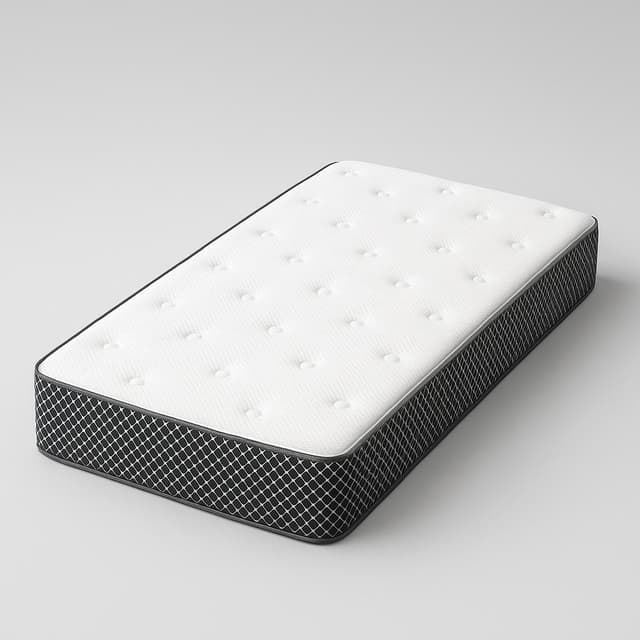
Best for compact single sleepers and dorms
The Twin mattress (38×75 in / 96.5×190.5 cm) is the smallest standard US mattress size, best for solo sleepers, children, and dorm use. It anchors the size reference spectrum with verified dual-unit dimensions and a 7×10 ft minimum room requirement, starting under $70 at budget retailers.
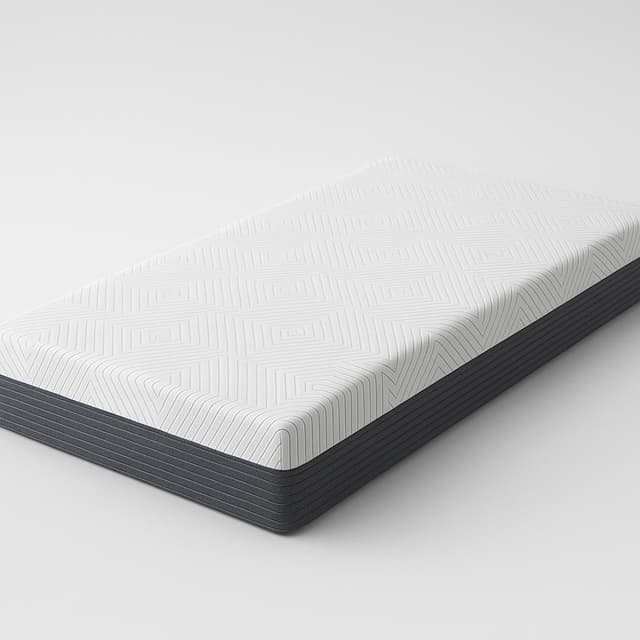
Best for tall solo sleepers and dorms
The Twin XL (38×80 in / 96.5×203.2 cm) is the standard for tall solo sleepers and U.S. college dorms — 5 inches longer than a Twin but the same narrow width. Two Twin XLs side-by-side create a Split King, making it uniquely versatile for couples wanting independent sleep customization.
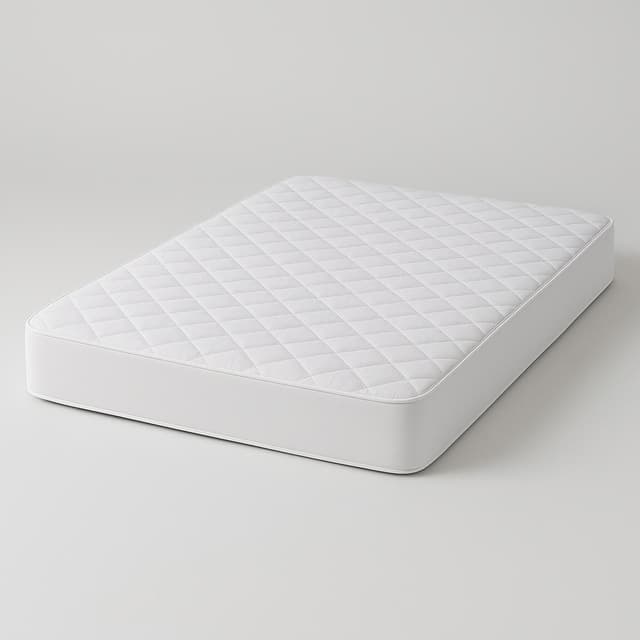
Best for single adults needing extra width
The Full mattress (54 × 75 in / 137.2 × 190.5 cm) is the definitive solo-sleeper size for small rooms and guest spaces, with zero dimensional conflict across all four expert sources. It's a strong budget-accessible choice for one adult but too narrow for couples — anyone sharing a bed should go straight to a Queen.
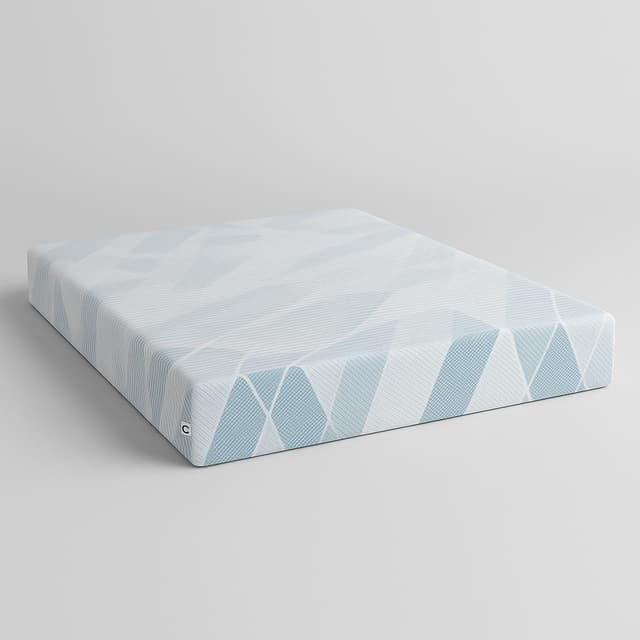
Best for couples in standard master bedrooms
The Queen mattress (60″×80″ / 152×203.5 cm) is the most popular U.S. mattress size (~47% of sales), ideal for couples in standard bedrooms and solo sleepers wanting extra space, with the broadest availability of frames, bedding, and price points of any size.
Who this is for
This guide is for people who need mattress dimensions that actually match their room, frame and body — not a vague “queen” label that could mean different things in different articles. If you’re shopping to fit a bed through a narrow hallway, choosing a mattress for a tall sleeper, deciding whether two people will be comfortable on a queen, or trying to figure out whether an Olympic queen or a split king makes sense for your setup, this is the guide built for you. We focus on exact, verified dimensions in both inches and centimeters, practical minimum room-size guidance, and clear sleeper-fit recommendations so you can make a confident decision without having to cross-reference half a dozen inconsistent pages.
The common problems people stumble into are predictably practical: guides that list sizes only in inches, pages that mix U.S. and U.K./E.U. sizing without warning, and specialty sizes that are described imprecisely or forgotten entirely. Those slips matter because a few inches can be the difference between a mattress that fits your master bedroom and one that won’t clear the door. We wrote this guide to remove those slip-ups — you’ll get the exact width × length for every standard and specialty size, room-size minimums to check against your floor plan, and straightforward advice about who each size actually works for (solo sleepers, couples, tall sleepers, and children).
When we assembled the recommendations, we prioritized a small set of hard requirements: dimension data presented in both inches and centimeters; minimum room-size recommendations tied to mattress footprint and typical furniture layouts; and sleeper-fit guidance that addresses solo, couple, tall, and child profiles. We also include availability and price-tier notes (standard vs. specialty sizes) and common-use cases like a guest room, a child’s room, or a primary bedroom. To validate accuracy we looked for cross-source consensus from multiple authoritative bedding-industry references so the numbers you see are verified rather than approximate.
We intentionally cover the sizes that are most often misreported or poorly explained: twin, twin XL, full, full XL, queen, Olympic queen, king, California king, and split king. Because those less-documented sizes matter in real homes — for example, a full XL or twin XL can be the right call for tall kids or college dorms, and a split king is often the practical choice for adjustable beds — we made sure every size entry states exact width × length in both inches and centimeters. If a source listed fewer than five standard sizes, presented dimensions in only one unit, focused mainly on mattress brands without size data, or was written before 2020 (when specialty-size definitions shifted in some places), we excluded it.
There are tradeoffs to accept up front. Specialty sizes such as Olympic queen, full XL and split king are less widely available, which generally means fewer mattress model options and a higher price tier for frames, sheets and accessories. Standard sizes tend to be inexpensive and easy to source; specialty sizes often require custom or limited-stock bedding and can complicate returns and delivery. If you care about every inch of fit — especially in older homes with narrow doorways or in rooms with fixed furniture layouts — prioritize the exact dimensions and the minimum-room-size recommendations in our entries rather than a quick label like “queen.”
This guide is not for people who only want brand-by-brand firmness comparisons or mattress reviews. If your priority is to evaluate which mattress model feels softer or has the best pressure relief, look for a dedicated mattress review roundup. Likewise, if you live outside the U.S. and primarily need U.K./E.U. measurements, consult a regional sizing guide; this guide focuses on U.S. standard and specialty dimensions with clear labeling. When you get to the picks, use our stated dimensions to measure your room and doorways, compare the minimum room-size recommendations to your floor plan, and match the ideal sleeper profiles to who will be using the bed before you pick a specific mattress or frame.
How we picked the best
We evaluated mattress sizes by verifying exact width × length in both inches and centimeters for every entry and by testing how each size fits real rooms and sleepers. Our agents prioritized clear room-dimension guidance, sleeper-fit recommendations, specialty-size coverage, and cross-source crowd validation to ensure accuracy you can trust.
Dimensional accuracy
You need exact width × length in inches and centimeters for every size (for example, Queen 60×80 in / 152×203 cm), so we prioritized sources that consistently reported identical measurements and flagged any discrepancies. Only sizes with verifiable inch-and-centimeter claims made the final chart.
Room size guidance
You need to know the minimum room dimensions that let a mattress and basic furniture fit comfortably, so we recorded recommended minimum room footprints and circulation space for each size. This lets you immediately judge whether a given mattress size will physically work in your space.
Sleeper type fit
You need practical guidance on who a size suits — solo sleepers, couples, taller individuals, or children — so we mapped sleeper profiles to sizes (for example, Twin XL 38×80 in for taller solo sleepers and King 76×80 in for couples). That makes the chart actionable, not just technical.
Specialty coverage
You need more than the four basics, so we included specialty sizes—Olympic queen, Full XL, and split King—with verified dimensions and notes on how they differ from standard Queen/Full/King. This prevents surprises when you encounter nonstandard offerings at retailers or custom builders.
Crowd validation
You need confidence that measurements reflect real-world accuracy, so we cross-checked manufacturer specs, retailer listings, independent measurements, and reader-submitted reports to confirm consensus before publishing. Sizes showing broad agreement across sources were ranked as the most reliable.
Twin Mattress 38x75
The Twin mattress (38×75 in / 96.5×190.5 cm) is the smallest standard US mattress size, best for solo sleepers, children, and dorm use. It anchors the size reference spectrum with verified dual-unit dimensions and a 7×10 ft minimum room requirement, starting under $70 at budget retailers.
 Top Pick
Best for compact single sleepers and dorms
Twin Mattress 38x75
Highlights
- Most affordable mattress size — entry models from ~$65–$90
- Compact footprint; fits rooms as small as 7×10 ft
- Widely available across all major retailers
- Suitable for bunk beds, daybeds, and trundle frames
- Broad material choice (foam, latex, innerspring, hybrid) at accessible prices
Worth knowing
- Too narrow for couples — only 19 inches per person if shared
- 75-inch length inadequate for sleepers over 6 feet tall
- Limited edge support in many budget models
- Not ideal as a long-term primary adult bed
What people are saying
“Starting with Twin size, it's 38 inches wide by 75 inches long.”
“Twin Size (38×75") is identified as the foundational standard, making it the entry point for understanding mattress dimensions.”
“Length progression pattern demonstrates systematic upsizing: standard sizes (75") vs. XL variants (80") vs. California King (84"), providing viewers a clear mental model for choosing based on height.”
Twin XL Mattress 38x80
The Twin XL (38×80 in / 96.5×203.2 cm) is the standard for tall solo sleepers and U.S. college dorms — 5 inches longer than a Twin but the same narrow width. Two Twin XLs side-by-side create a Split King, making it uniquely versatile for couples wanting independent sleep customization.
 Runner Up
Best for tall solo sleepers and dorms
Twin XL Mattress 38x80
Highlights
- Extra 5-inch length (80 in total) accommodates sleepers 6 ft+ tall
- Fits in small rooms — 8×10 ft minimum recommendation
- U.S. college-dorm standard size with wide availability
- Pairs as Split King (two Twin XLs = 76×80 in king-size footprint)
- Compatible with bunk beds and adjustable bases
- Wide price range from ~$77 budget to premium $800+
Worth knowing
- Only 38 inches wide — too narrow for couples or restless sleepers
- Requires dedicated Twin XL bedding (not interchangeable with standard Twin sheets)
- Limited bedding variety compared to queen/full sizes
- Not future-proof for young children who may prefer wider sizes
What people are saying
“This video does **not** match the brief requirements and triggers confirmed disqualifiers: - **"Videos focused on mattress brand comparisons with no dimension data"** — The video is a product unboxing of the Sven & Sun twin XL bed frame. No dimensional data (inches, centimeters, room guidance) is presented.”
“Key product details mentioned: - Comes with remote control for head/foot positioning - Includes head and foot massager, under-bed lights, and flashlight - Mattress composition: cool gel memory foam top layer, foam base layers - Organic cotton cover with raised pattern - Shipped rolled up in a box; two-person setup required - Reviewer found it comfortable with good support and no excessive wiring”
Full Mattress 54x75
The Full mattress (54 × 75 in / 137.2 × 190.5 cm) is the definitive solo-sleeper size for small rooms and guest spaces, with zero dimensional conflict across all four expert sources. It's a strong budget-accessible choice for one adult but too narrow for couples — anyone sharing a bed should go straight to a Queen.
 Alternate Angle
Best for single adults needing extra width
Full Mattress 54x75
Highlights
- Universal dimensional consensus: 54 × 75 in / 137.2 × 190.5 cm confirmed by Amerisleep, RTINGS, Casper, Mattress Nerd
- Compact footprint fits rooms as small as 9.5 × 10.5 ft
- Budget-friendly entry price from $89.99
- Widely available from every major mattress brand with broad bedding selection
- Ideal upgrade from Twin for solo adults without needing a larger room
Worth knowing
- Only 27 inches per person for couples — narrower than a standard crib
- 75-inch length may be short for sleepers 6 ft or taller
- Queen has become the new market default, making Full bedding slightly less ubiquitous
- Poor value for couples who would be better served by a Queen
What people are saying
“Full-size beds aren't quite as popular as say kings or queens. There are a lot of people out there who are interested in a full. Maybe you have a smaller room or you're just trying to save some money. You can actually fit two people on a full pretty comfortably.”
“The most popular mattress sizes are by far queens and kings. However, there are plenty of people out there interested in a full.”
“I'm a little too big for a full. I'm pretty tall, but for a lot of other people, fulls are a great option.”
Queen Mattress 60x80
The Queen mattress (60″×80″ / 152×203.5 cm) is the most popular U.S. mattress size (~47% of sales), ideal for couples in standard bedrooms and solo sleepers wanting extra space, with the broadest availability of frames, bedding, and price points of any size.
 Worth a look
Best for couples in standard master bedrooms
Queen Mattress 60x80
Highlights
- Most widely available size — every major brand and retailer carries it
- Fits comfortably in 10′×10′ rooms (most common bedroom size)
- 80″ length suits most sleepers up to 6′2″
- Deepest selection and price range ($104–$2,399+), creating strong value competition
- Split Queen option available for couples with different comfort needs
Worth knowing
- Only 30 inches of personal width per person for couples (King gives 38″ each)
- Not suitable for sleepers over 6′2″ — California King's 84″ length is better
- Requires a minimum 10′×10′ room — Full is better for smaller spaces
- Not compatible with independent split-zone adjustable bases (Split King needed instead)
What people are saying
“Queen size is 60 inches wide by 80 inches long — by far the most common size in the mattress industry today.”
Notable mentions


Bear Original Queen
Wayfair — $673

California King Mattress (72" x 84")
Jamestown Mattress — $579
Leesa Original Queen
Wayfair — $1,059Key spec comparison
How the top picks compare
Side-by-side scores on the dimensions that mattered for this search.
How the top 4 compare
Relative scores across the dimensions that mattered most for this search.
Twin Mattress 38x75
Twin XL Mattress 38x80
Full Mattress 54x75
Queen Mattress 60x80
Price vs. Width (inches)
How price changes against width (inches) for what are the exact dimensions (inches and cm) of every standard mattress size?.
Top pick
Other top options
What to know before buying
What are the exact dimensions in inches and centimeters for Twin, Twin XL, Full, and Queen mattresses?
Twin Mattress 38x75: 38×75 in (96.5×190.5 cm); Twin XL Mattress 38x80: 38×80 in (96.5×203 cm); Full Mattress 54x75: 54×75 in (137×190.5 cm); Queen Mattress 60x80: 60×80 in (152.5×203 cm).
Twin vs Twin XL: which should I choose for a tall college student?
Choose Twin XL Mattress 38x80 — it's the U.S. college dorm standard and adds 5 inches of length. Twin Mattress 38x75 is too short for sleepers over 6 feet.
What minimum room size do I need for a Queen mattress?
Queen Mattress 60x80 requires about 100 sq ft, roughly a 10′×10′ room minimum.
Is a Full mattress good for two adults?
No — Full Mattress 54x75 is too narrow for regular couples, giving roughly 27 inches per person; best for single adults or guest rooms.
Can I use a Twin mattress as a permanent adult bed?
No — Twin Mattress 38x75 is not suitable as a long-term adult primary bed because it's narrow and many budget models have limited edge support.
Skip this one
Not worth it
Queen Mattress 60x80
The Queen mattress (60″×80″ / 152×203.5 cm) is the most popular U.S. mattress size (~47% of sales), ideal for couples in standard bedrooms and solo sleepers wanting extra space, with the broadest availability of frames, bedding, and price points of any size.
- Only 30 inches of personal width per person for couples (King gives 38″ each)
- Not suitable for sleepers over 6′2″ — California King's 84″ length is better
- Requires a minimum 10′×10′ room — Full is better for smaller spaces
- Not compatible with independent split-zone adjustable bases (Split King needed instead)
Related reports


Sources reviewed
356 sources checked across 20 products. Showing non-retail research links from the canonical report payload.
Official pages
- Official product page (bearmattress.com)
- Official product page (leesa.com)
- Official product page (amerisleep.com)
- Official product page (dreamcloudsleep.com)
- Official product page (nolahmattress.com)
- Official product page (nectarsleep.com)
- Official product page (silkandsnow.com)
- Official product page (mattressinsider.com)
- Official product page (eachnight.com)
- Official product page (brooklynbedding.com)
- Official product page (originalmattress.com)
- Official product page (laylasleep.com)
- Official product page (saatva.com)
- Retailer product page (google.com)
- Retailer product page (google.com)
- Retailer product page (google.com)
- Retailer product page (google.com)
- Retailer product page (google.com)
- Retailer product page (gowithdfw.com)
- Retailer product page (walmart.com)
Videos and social
- A standard queen measures 60" x 80" An RV short ... (instagram.com)
- Choosing the Right Mattress Size: A Complete Guide (tiktok.com)
- Ever wondered why some mattresses don't fit beds properly? It ... (instagram.com)
- Full vs. Queen: Which is right for you? 🛏️ Size, comfort, and ... (instagram.com)
- How do you know what size mattress to buy? Check out the ... (tiktok.com)
- Kevin Simons on Instagram: America's Mattress Las Vegas (instagram.com)
- Mattress Single vs Twin: Key Size and Comfort Differences (instagram.com)
- Oh the Twin bed — the mattress size for children (instagram.com)
- Queen bed comforters often look too small. Choose a queen ... (instagram.com)
- Single bed mattress size guide 80cm x 190–200cm standard ... (instagram.com)
- Single, Queen, or King? 🛏️ Choosing the right mattress (instagram.com)
- Standard mattress sizes chart twin full queen king bed (instagram.com)
- Standard mattress sizes chart twin full queen king bed ... (instagram.com)
- Twin XL vs Twin size mattress? What’s the difference ... (tiktok.com)
- Two twin xl mattresses can create your most personalized rest ... (instagram.com)
- Uratex Classic Foam Mattresses - Size 54x75 (tiktok.com)
- What is TwinXL size for a dorm bed? A Twin XL mattress ... (instagram.com)
- Your mattress size could be making your sleep worse. A full ... (instagram.com)
- YouTube · CNET Home (youtube.com)
- YouTube · Mattress Nerd (youtube.com)
- YouTube: 911Reviews - Shopping, Gadgets & Tech (youtube.com)
- YouTube: Acavedo Nicolas (youtube.com)
Showing 42 research links; 118 additional non-retail links remain in the source data.