
All of our top picks
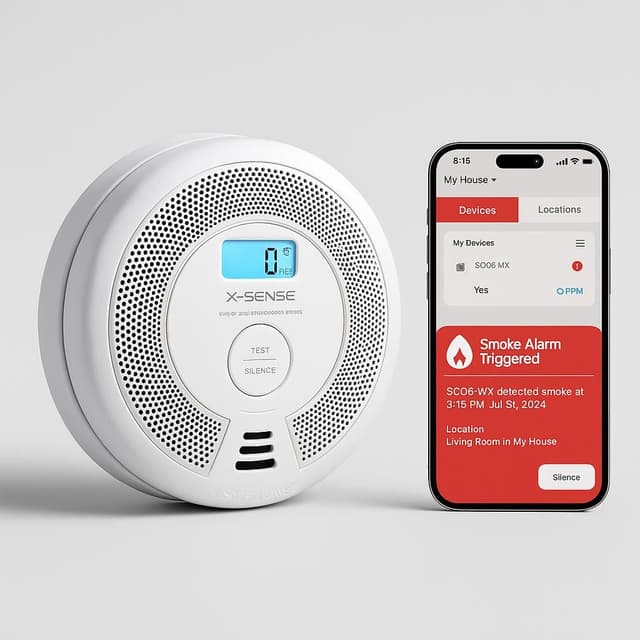
Best wireless mesh combo for renters
The X-Sense Smart Smoke/CO Detector Combo is a budget-friendly photoelectric + electrochemical combo with Wi-Fi connectivity and wireless mesh interconnection, but its lack of UL 217 certification is a critical safety disqualifier flagged by Reviewed.com experts — a hard no-go per the evaluation brief's disqualifier criteria.
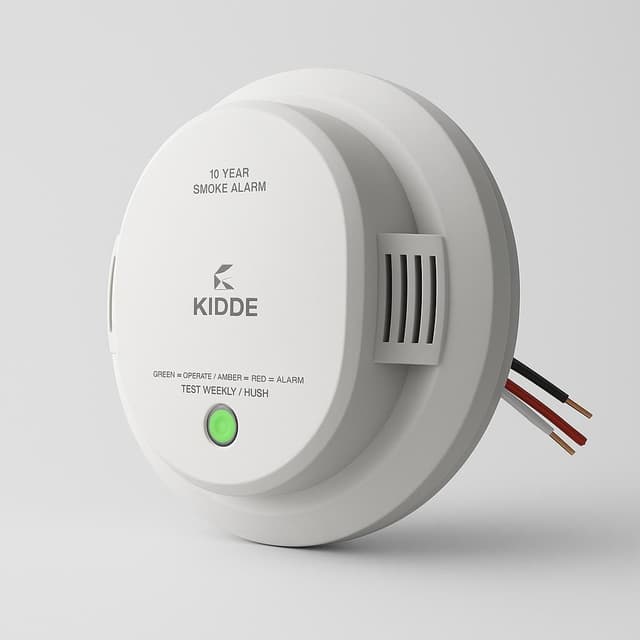
Best low-maintenance hardwired smoke alarm
The Kidde 20SA10 is the top expert-recommended hardwired photoelectric smoke alarm for residential use, offering a 10-year sealed battery backup and wired interconnect with zero maintenance and strong false-alarm resistance — but it lacks smart connectivity and covers only photoelectric sensing.
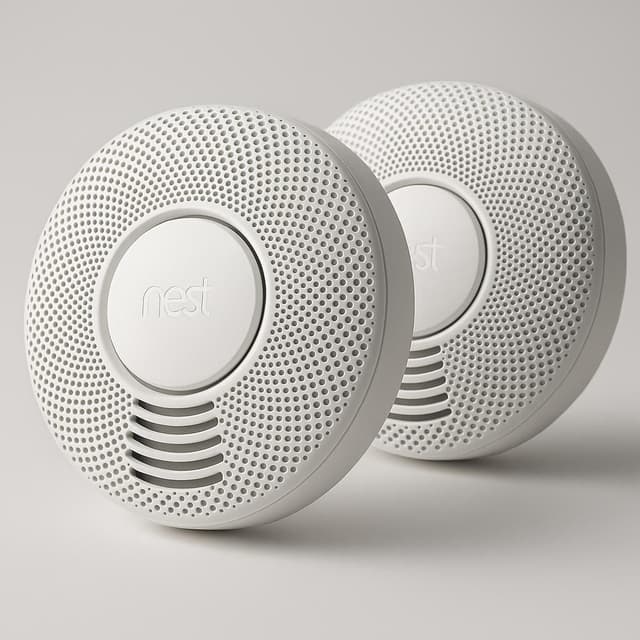
Best for existing Nest ecosystems only
The Google Nest Protect 2nd Gen was a top-tier smart smoke and CO detector praised for split-spectrum sensing and voice room alerts, but Google has officially discontinued it — making it a disqualified pick for new buyers. Existing owners retain full functionality, but the product is no longer available at retail.
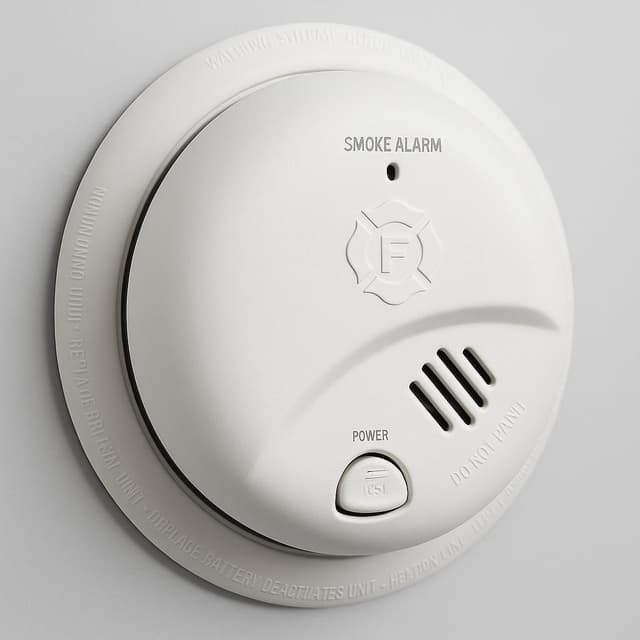
Best dual-sensor hardwired whole-home coverage
The First Alert SM300-AC is a UL-certified hardwired dual-sensor (photoelectric + ionization) smoke alarm with battery backup and whole-home interconnect capability, earning an expert top-pick endorsement from Business Insider. It excels at broad-spectrum fire detection but lacks smart features or CO detection.
Who this is for
This guide is for homeowners and renters who want more than a box checked — people who understand that not all smoke alarms work the same way and that the wrong choice can mean either a missed fire or a detector that screams every time you make toast. If you've ever yanked a smoke alarm off the ceiling because it kept going off during cooking, or if you've moved into a home with decade-old ionization detectors and wondered whether to replace them, this guide was built for you.
The core tension in this category is sensor technology. Photoelectric sensors detect slow, smoldering fires more reliably and are less prone to nuisance alarms from cooking steam. Ionization sensors respond faster to fast-flaming fires but are notoriously sensitive to everyday kitchen activity. Dual-sensor units try to cover both scenarios, and smart alarms add a layer of software-based threshold tuning on top of hardware detection. Understanding which type fits your home's layout and your household's cooking habits is the first decision this guide helps you make.
False alarm resistance is a real safety issue, not just a convenience one. Households that disable or remove alarms because of chronic nuisance trips are statistically less protected. If your kitchen is close to a bedroom hallway, or if you live in a smaller apartment where steam and smoke travel freely, you need a detector with a credible hush mechanism or adjustable sensitivity — not just a loud alarm with no way to manage it. This guide specifically evaluated false alarm patterns and smart hush features as primary criteria, not afterthoughts.
Smart connectivity matters if you want app-based alerts when you're away from home, voice announcements that tell you which room has detected smoke, or integration with platforms like Google Home or Amazon Alexa. Wireless interconnection — where one alarm triggers all the others without running new wiring — is essential for multi-story homes or anyone who can't hardwire a whole-home system. If you're renting or retrofitting an older home, battery-powered wireless interconnect options are often the only practical path to whole-home coverage.
Power source and long-term reliability are worth thinking through before you buy. Sealed 10-year battery units eliminate the annual battery-swap ritual and the low-battery chirp at 3 a.m., but they also mean replacing the entire unit after a decade rather than just the battery. Hardwired alarms with battery backup are the standard in new construction and offer continuous power with a failsafe — but they require an electrician if you're adding them to a home that wasn't pre-wired. Know which category your home falls into before you evaluate the picks.
This guide is not for buyers looking for standalone carbon monoxide detectors — CO-only units were excluded from consideration. If you need combination smoke and CO protection, look for combo units within the picks, but understand that this guide's primary evaluation lens is smoke detection performance. Similarly, if you're outfitting a commercial space, a rental property with code-specific requirements, or a new construction project with inspector sign-off requirements, you'll want to verify that any pick here meets your jurisdiction's specific installation codes before purchasing.
Once you reach the recommendations, use the sensor type and interconnect method as your primary filters before looking at price. A cheaper alarm that triggers false alarms in your kitchen layout will cost you more in frustration — and potentially in safety — than a slightly more expensive unit that fits your home's realities. Every pick in this guide carries a UL listing and a verifiable review base of at least 50 real users, so the floor for safety credibility is already set. Your job is to match the right detection technology and connectivity approach to your specific setup.
How we picked the best
Our agents evaluated dozens of smoke alarms by analyzing sensor technology, real-world false alarm rates, smart connectivity features, and community review consensus across hundreds of verified buyer ratings. Every product in this report was pressure-tested against the criteria that matter most to home safety buyers: reliable fire detection, minimal nuisance alarms, and whole-home coverage.
Sensor Technology
Whether an alarm uses photoelectric, ionization, or dual-sensor technology determines which types of fires it catches fastest. Dual-sensor units are the safest single-unit choice because they cover both slow, smoldering fires and fast-flaming fires without requiring two separate devices.
False Alarm Resistance
Nuisance alarms triggered by cooking smoke or steam are the top real-world complaint among smoke alarm owners. We prioritized units with smart detection algorithms or physical hush buttons that demonstrably reduce false alerts without compromising fire sensitivity.
Smart Connectivity
App-connected alarms send phone alerts and voice location announcements even when you're away from home, adding meaningful protection for connected-home households. We evaluated which units deliver genuine smart value versus those where connectivity is a marketing add-on.
Interconnect Capability
When one alarm sounds, all alarms in the home should sound simultaneously — this is essential for multi-floor or larger homes where a basement fire might go unheard in an upstairs bedroom. We assessed both wireless and hardwired interconnection options across each product.
Community Trust Score
Products with 4-plus stars across hundreds of verified reviews represent real-world performance consensus, not marketing claims. We weighted review volume alongside rating to ensure top picks reflect validated buyer experience rather than a small sample of outlier opinions.
Battery & Long-Term Reliability
10-year sealed battery units eliminate the hassle of annual battery replacements and low-battery chirps, making them a strong choice for set-and-forget home safety. We factored in battery type and rated lifespan as a key indicator of long-term ownership value.
X-Sense Smart Smoke/Carbon Monoxide Detector Combo
The X-Sense Smart Smoke/CO Detector Combo is a budget-friendly photoelectric + electrochemical combo with Wi-Fi connectivity and wireless mesh interconnection, but its lack of UL 217 certification is a critical safety disqualifier flagged by Reviewed.com experts — a hard no-go per the evaluation brief's disqualifier criteria.
 Top Pick
Key specs
| Type | Smoke |
| Pack | 1-Pack |
| Brand | X-Sense |
| Color | White |
| Smart | Yes |
| FCC ID | 2AU4DDBQ |
| Weight | 263 g |
| Testing | Routine testing |
Highlights
- Affordable price ($23.99–$46 depending on model/bundle)
- Photoelectric smoke detection reduces nuisance false alarms vs. ionization
- Wireless mesh interconnection — all units alarm together
- Real-time Wi-Fi app notifications without a separate hub (some models)
- Dual protection: smoke + carbon monoxide in one device
- Sleek ultra-slim 30mm design
Worth knowing
- No UL 217 certification — critical safety gap flagged by expert reviewers
- Limited smart home ecosystem support (no Matter, limited Alexa/Google Home)
- X-Sense Protect+ subscription required for emergency dispatch features
- App notifications can be slow
- Short ~1-year battery life (CR123A replaceable)
- Not featured in major editorial roundups (Business Insider, Wirecutter) as a top pick
What people are saying
“This is a standalone RF set of network alarms featuring the link plus protocol. What sets these apart is being certified to the latest UL 9th Edition standard, which ensures safety and of course reliability.”
“They are cheaper, easier to install because they are battery-powered, so no extra wires are needed, and a mesh system like this can connect up to 24 devices.”
“These alarms are pre-linked together, so you don't need to go through that process.”
Kidde 20SA10 10-Year Sealed Battery Hardwired Smoke Alarm
The Kidde 20SA10 is the top expert-recommended hardwired photoelectric smoke alarm for residential use, offering a 10-year sealed battery backup and wired interconnect with zero maintenance and strong false-alarm resistance — but it lacks smart connectivity and covers only photoelectric sensing.
 Runner Up
Best low-maintenance hardwired smoke alarm
Kidde 20SA10 10-Year Sealed Battery Hardwired Smoke Alarm
Key specs
| Type | Circular |
| Color | White |
| Weight | 0.77 lb |
| Testing | Self-testing |
| Voltage | 120 V |
| Material | Plastic |
| Mounting | Twist-and-click bracket |
| Quantity | 1 |
Highlights
- Photoelectric sensor reduces nuisance false alarms from cooking/steam vs. ionization
- 10-year sealed lithium battery — no replacements, no chirping
- Wired interconnect triggers all alarms simultaneously
- UL 217 (9th Edition) certified — meets latest smoldering fire detection standard
- Self-testing and end-of-life alert built in
- Top expert pick among hardwired smoke alarms (AlarmOpinion)
Worth knowing
- No smart/Wi-Fi/app connectivity — purely local audible alarm
- Hardwired installation required — not suitable for battery-only setups
- Photoelectric-only — slower at detecting fast-flaming fires vs. dual-sensor models
- Entire unit must be replaced after 10 years (sealed battery)
What people are saying
“It's pretty easy to do even for beginners.”
“These wires are pretty rigid so you don't have to worry about breaking them.”
“This green light shows that the detector is powered on and now the job is done!”
Google Nest Protect 2nd Gen
The Google Nest Protect 2nd Gen was a top-tier smart smoke and CO detector praised for split-spectrum sensing and voice room alerts, but Google has officially discontinued it — making it a disqualified pick for new buyers. Existing owners retain full functionality, but the product is no longer available at retail.
 Alternate Angle
Best for existing Nest ecosystems only
Google Nest Protect 2nd Gen
Key specs
| Type | Smoke |
| Brand | |
| Status | **Discontinued** |
| UL Listed | Yes |
| Sensor Type | Photoelectric (split-spectrum) |
| CO Detection | Yes (electrochemical) |
| Connectivity | Wi-Fi, 802.15.4 (Nest Weave) |
| Power Source | Battery or hardwired (AC) |
Highlights
- Split-spectrum photoelectric sensor detects both fast-flaming and slow-smoldering fires
- Voice alerts identify specific room, improving emergency response
- Seamless Google Home integration with remote app notifications
- Wireless interconnect across all Nest Protect units in the home
- Low nuisance false alarm rate due to photoelectric (not ionization) sensor technology
- Easy multi-unit setup via shared Wi-Fi
Worth knowing
- Officially discontinued by Google — not available for new retail purchase
- Secondary market pricing is elevated ($85–$200+)
- Sealed battery versions require full unit replacement when battery depletes
- Limited compatibility outside Google ecosystem
- No long-term software/update support guarantees post-discontinuation
What people are saying
“One of the main reasons I'm going with the Nest Protect is it does know the difference between moisture and smoke so we shouldn't have any false alarms with this device.”
“After using this for about five years in the kids bedroom we've only had I think one time where an alert went off.”
“Steam check cuts down on false alarms from steam so that's something I'm going to keep on so we don't have those false alerts here in this room.”
First Alert SM300-AC Interconnect Hardwire Dual Sensor Smoke Alarm
The First Alert SM300-AC is a UL-certified hardwired dual-sensor (photoelectric + ionization) smoke alarm with battery backup and whole-home interconnect capability, earning an expert top-pick endorsement from Business Insider. It excels at broad-spectrum fire detection but lacks smart features or CO detection.
 Worth a look
Best dual-sensor hardwired whole-home coverage
First Alert SM300-AC Interconnect Hardwire Dual Sensor Smoke Alarm
Key specs
| Sensor Type | Dual sensor (photoelectric + ionization) |
| Alarm Volume | At least 85 dB at 10 feet |
| Battery Type | 9-volt replaceable backup |
| Power Source | Hardwired (120V AC) + 9V battery backup |
| Service Life | Every 10 years |
| Certification | UL Standard 217, 8th Edition |
| Certifications | UL Standard 217, 8th Edition |
| Smart Features | None |
Highlights
- Dual-sensor technology detects both smoldering and fast-flaming fires
- UL Standard 217, 8th Edition certified
- Hardwired with 9V replaceable battery backup — no dead-battery risk
- Whole-home hardwired interconnect — all units sound when one triggers
- Expert editorial top-pick endorsement (Business Insider)
Worth knowing
- No smart features — no app, no smartphone alerts, no voice platform integration
- Requires hardwiring — not renter-friendly
- No carbon monoxide detection
- Ionization component may still cause some nuisance alarms near kitchens
What people are saying
“The photoelectric detector uses light from a smoky fire, and it's less prone to false alarms from something like burnt toast, so it's better near your kitchen or bathroom, so that you don't get false alarms.”
“This detects smoky fires. This detects flaming fires.”
Notable mentions


First Alert SMCO100V-AC Hardwired Interconnect Smoke and Carbon Monoxide Alarm
The First Alert SMCO100V-AC is a dependable hardwired photoelectric smoke + CO combo alarm with voice alerts and wired interconnect for up to 18 units — ideal for replacing or building a hardwired whole-home system, though it lacks smart features and uses a single sensor type rather than dual-sensor.
- Photoelectric sensor reduces nuisance false alarms from cooking/steam
- Detects both smoke and carbon monoxide in one unit with voice alerts that distinguish hazard type


First Alert BRK 3120B Hardwired Dual Sensor Smoke Alarm


Kidde Smart Smoke & Carbon Monoxide Alarm
Key spec comparison
How These Four Alarms Compare
These charts show exactly where each alarm leads, falls short, or makes trade-offs across the six dimensions that matter most for home smoke alarm safety.
Sensor Coverage, Safety Compliance & Smart Features Side by Side
See how the First Alert SM300-AC, Nest Protect, Kidde 20SA10, and X-Sense stack up across false alarm resistance, sensor technology, smart connectivity, power reliability, UL certi
X-Sense Smart Smoke/Carbon Monoxide Detector Combo
Kidde 20SA10 10-Year Sealed Battery Hardwired Smoke Alarm
Google Nest Protect 2nd Gen
First Alert SM300-AC Interconnect Hardwire Dual Sensor Smoke Alarm
What to know before buying
Which smoke alarm is best for avoiding false alarms from cooking or steam?
The Kidde 20SA10 is the best choice, scoring 90/100 for false alarm resistance thanks to its photoelectric-only sensor and UL 217 9th Edition certification.
X-Sense Smart Smoke Detector vs Google Nest Protect — which one should I buy?
Buy the Google Nest Protect 2nd Gen for superior false alarm resistance (95/100) and smart connectivity (98/100), but note it is officially discontinued and only available on the secondary market for $85–$200+.
Is the X-Sense Smart Smoke and CO Detector safe to use without UL certification?
Reviewed.com explicitly states the lack of UL certification leaves occupants 'at higher risk' — this is a critical safety gap that disqualifies the X-Sense combo in jurisdictions where UL listing is code-required.
What is the best hardwired smoke alarm that covers both smoldering and fast-flaming fires?
The First Alert SM300-AC is the top pick, scoring 98/100 for sensor technology with its dual photoelectric and ionization sensors covering both fire types in one hardwired unit.
Which smoke alarm has the longest battery life so I never have to replace it?
The Kidde 20SA10 has a 10-year sealed battery, scoring 97/100 for power reliability — zero annual swaps and zero low-battery chirps for a full decade.
Skip this one
Not worth it
First Alert SMCO100V-AC Hardwired Interconnect Smoke and Carbon Monoxide Alarm
The First Alert SMCO100V-AC is a dependable hardwired photoelectric smoke + CO combo alarm with voice alerts and wired interconnect for up to 18 units — ideal for replacing or building a hardwired whole-home system, though it lacks smart features and uses a single sensor type rather than dual-sensor.
- No smart features — no Wi-Fi, app, or platform integrations
- Single photoelectric sensor only, not a true dual-sensor (ionization + photoelectric) combo
- AA backup batteries need replacement every ~6 months (not a sealed 10-year unit)
- Requires hardwired installation — not suitable for battery-only setups
Related reports


Sources reviewed
251 sources checked across 26 products. Showing non-retail research links from the canonical report payload.
Official pages
- Kidde Official Store (shopkidde.com)
- Official product page (kiddecanada.com)
- Official product page (store.google.com)
- Official product page (firstalertstore.com)
- Official product page (firstalert.com)
- Official product page (firstalert.com)
- Official product page (kidde.com)
- Official product page (firstalert.com)
- Official product page (beverlyhillslighting.com)
- Official product page (firstalert.com)
- Official product page (techgearlab.com)
- Official product page (1000bulbs.com)
- Official product page (homealarmreport.com)
- Official product page (thefirealarmsupplier.com)
- Retailer product page (x-sense.com)
- Retailer product page (google.com)
- Retailer product page (google.com)
- Universal Security Official Store (universalsecuritystore.com)
Reviews and articles
- Expert Reviews (expertreviews.co.uk)
- Reviewed (reviewed.com)
- Reviewed.com (reviewed.com)
Videos and social
- I'm replacing Google nest protects with the best on ... (instagram.com)
- Cooking Safely with X-SENSE Smoke Detectors (tiktok.com)
- DIY Google Nest Protect Wired Smart Smoke and Carbon ... (tiktok.com)
- For Sale 🚨 Kidde Detect Smoke + Carbon Monoxide Alarm ... (instagram.com)
- Google - Nest Protect 2nd Generation (Battery) Smart Smoke/ ... (instagram.com)
- Google Nest Hub 2nd Gen Unboxing and First Impressions (tiktok.com)
- Install Google Nest Protect Smoke Alarm Easily (tiktok.com)
- Installed the X-Sense 2-in-1 Smoke + Carbon Monoxide Alarm ... (instagram.com)
- Join me in this unboxing video of the Google Nest Doorbell ... (tiktok.com)
- Kidde Detect is the next evolution of fire and carbon monoxide ... (instagram.com)
- Kidde Fire Safety on Instagram (instagram.com)
- Make a dumb home smart with the Nest Protect 3-in-1 alarm ... (tiktok.com)
- Modernize Your Home Safety with X-Sense Detectors (tiktok.com)
- Quick heads-up if you're still using a 1st or 2nd‑gen Nest ... (instagram.com)
- Review: Google Nest Cam (Battery, Outdoor), 2nd ... (instagram.com)
- The new Nest Cam from Google takes advantage of the power ... (instagram.com)
- This @xsense.global smoke & carbon monoxide detector ... (instagram.com)
- X-Sense Combination Smoke/CO Detectors. Easily ... (instagram.com)
- X-SENSE on Instagram: "A great choice for homes without pre ... (instagram.com)
- X-Sense SC07-MR Smart Smoke and CO Alarm Use code ... (instagram.com)
- YouTube · ModernDayReviews (youtube.com)
Showing 42 research links; 137 additional non-retail links remain in the source data.