Most shoppers arrive at a bed search with a mattress size in mind and not much else. The result is a familiar trap: hours spent scrolling through listings without a clear sense of whether a platform frame, a loft, a bunk, a canopy, or a Murphy bed actually fits the room, the household, or the budget. The type of bed is the decision that shapes everything downstream, yet it rarely gets addressed first.
The structural differences between bed types are more consequential than they appear. A platform bed eliminates the box spring, sits low to the floor, and works in almost any room size, making it the most versatile starting point for most buyers. A loft bed trades the space beneath for a desk or storage zone, which is a genuine room-size solution rather than just a style choice. A bunk bed stacks two sleep surfaces vertically and demands ceiling clearance of roughly nine feet, so the room itself sets the constraint before price ever enters the conversation. A canopy or four-poster bed requires both floor space and ceiling height, and its visual weight anchors a room in a way that is difficult to undo. A Murphy bed, by contrast, disappears into the wall entirely, which is the right answer for a studio or a guest room that doubles as an office, and the wrong answer for almost every other situation.
Once the type is settled, the frame decision follows a tighter logic. Weight capacity, under-bed clearance, materials, joinery, and warranty length are the axes that separate a durable long-term purchase from one that creaks and wobbles within a year. Our bed frames report maps those tradeoffs across steel and solid-wood options at every price tier, from accessible metal platforms to premium hardwood builds. If you are still working out which structural category fits your room and lifestyle, the types of beds report is the right place to start, with each major type evaluated against real room-size requirements, multi-function utility, and owner-validated durability.
The sections below route you directly to the bed type that matches your situation, so you can skip the categories that do not apply and go straight to picks and prices.
Jump to a section
Navigate the Bed Types Guide
Skip straight to the report section that matches your situation -- platform, bunk, loft, canopy, Murphy, or size reference.

Top 4 Types of Beds
You were optimizing first for room size fit and multi-functionality, and Thuma The Bed came out on top for one core reason: Tool-free assembly in under 15 minutes — no hardware headaches. Midwest Farmhouse Rustic Solid Wood Loft Bed stayed close for a different reason: Handcrafted solid pine — no MDF or particleboard anywhere. The main tradeoff to keep in mind: Premium price ($845–$1,995+) — not a budget pick. That matters because your biggest concern was choosing the right bed type. We also filtered against hard constraints such as coverage of all major bed types in one guide and quick pros/cons and ideal-for notes per bed type.
Open report
Top 4 Types of Bed Frames
You were optimizing first for structural type clarity and materials and build, and Brooklyn Bedding High Rise Platform Bed came out on top for one core reason: Sleep Foundation 'Most Durable' — 1,500 lb tubular steel build. Avocado City Bed Frame Queen stayed close for a different reason: FSC + Greenguard Gold certified — most verified eco-credentials here. The main tradeoff to keep in mind: 3-year warranty is significantly shorter than competitors offering 5–10 years or lifetime. That matters because your biggest concern was long-term durability and build quality. We also filtered against hard constraints such as structural differences between frame types and clear differentiation between frame types by structure and function.
Open report
Top 4 Types of Platform Beds
You were optimizing first for price-to-value ratio and no-boxspring support, and Brooklyn Bedding High Rise Platform Bed came out on top for one core reason: Sleep Foundation's 'Most Durable' metal platform pick. Nolah Platform Base Queen stayed close for a different reason: Sleep Foundation 'Best Platform Bed' award winner. The main tradeoff to keep in mind: No headboard included — brackets sold separately. That matters because your biggest concern was price-to-quality ratio. We also filtered against hard constraints such as must have: Supports mattress directly without a boxspring and must have: Available at an accessible price point relative to its type.
Open report
Top 4 Bunk Bed Configurations
You were optimizing first for safety features and room fit and footprint, and ACME Furniture Eclipse Twin XL Over Queen and Futon Bunk Bed came out on top for one core reason: Only futon-bunk in the set — sofa converts to sleeper, no separate couch needed. DHP Twin-Over-Full Metal Bunk Bed stayed close for a different reason: Twin top + full bottom suits siblings with an age or size gap. The main tradeoff to keep in mind: 124 lbs gross weight capacity figure is ambiguous and potentially dangerous if misinterpreted as per-bunk limit. That matters because your biggest concern was safety: guardrail height and ladder stability. We also filtered against hard constraints such as Listicle must cover all 9 named configuration types and each configuration entry must include pros, cons, ideal age range, and ideal room size.
Open report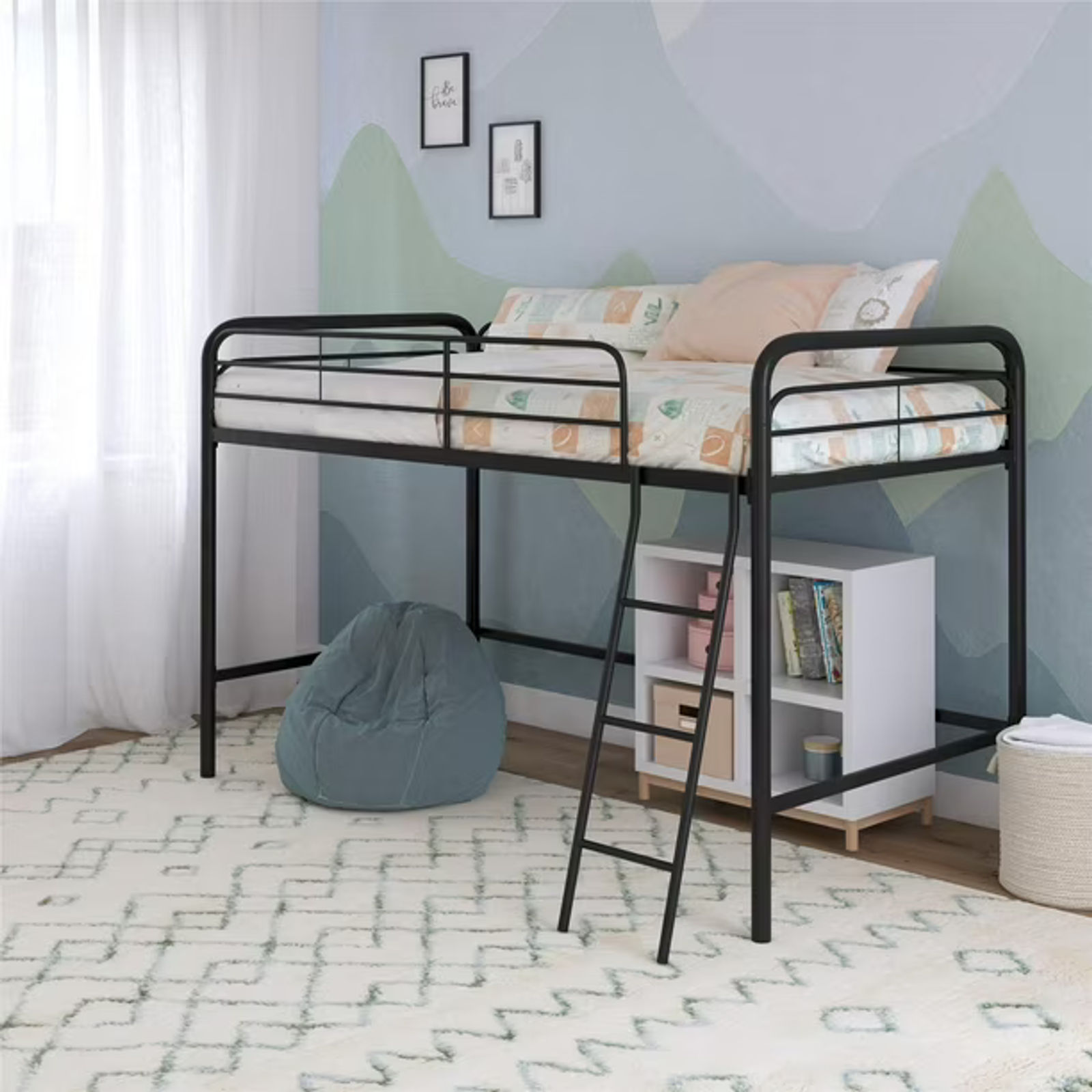
Top 4 Types of Loft Beds
You were optimizing first for loft height and clearance and age and user suitability, and DHP Jett Junior Twin Loft Bed came out on top for one core reason: ASTM-F1427 + CPSC dual certified — passes both key kids' safety standards. DHP Miles Metal Full Loft Bed with Desk stayed close for a different reason: Full-size mattress — only non-twin loft in the set. The main tradeoff to keep in mind: Weight capacity discrepancy across retailers (200 lb vs. 300 lb) — verify spec at point of purchase. That matters because your biggest concern was ceiling height clearance. We also filtered against hard constraints such as each loft type has defining built-in features (desk, futon, storage, L-shape) that must be documented and coverage must span all named style variants — not just the most popular subset.
Open report/https://static.havenly.com/product/production/sha256_0c4ed1508874cedd2afe9a334cbbda871a53de9a3c04efc6a4a77019a8173b60.jpeg)
Top 4 Canopy Bed Styles
You were optimizing first for style archetype fidelity and wood and material quality, and The Citizenry Shenandoah Bed Queen came out on top for one core reason: Appalachian walnut and ash — sustainably sourced, master-built in West Virginia. DutchCrafters Amish Handcrafted Josie Contemporary Platform Canopy Bed stayed close for a different reason: 15+ hardwood species — rare customization depth for a production bed. The main tradeoff to keep in mind: Full price of $5,419 (Queen) is the highest in the set at list price. That matters because your biggest concern was wood quality and joinery craftsmanship. We also filtered against hard constraints such as coverage across all major canopy bed style archetypes and must have: Coverage of at least four distinct canopy bed style archetypes (e.g., traditional four-poster, half-tester, modern minimalist, draped/princess canopy).
Open report
Top 4 Murphy Bed Variants
You were optimizing first for mechanism & hardware and cabinet construction, and Lori Bed Queen Vertical came out on top for one core reason: Lifetime warranty — rare confidence signal in the murphy bed category. AFI Daphne Solid Wood Murphy Bed Chest with Desk stayed close for a different reason: Dual-piston gas mechanism confirmed — calibrated for one-handed operation. The main tradeoff to keep in mind: No mattress included — must budget separately. That matters because your biggest concern was hardware and mechanism longevity. We also filtered against hard constraints such as coverage of all major Murphy bed variants and must have: Coverage of all major Murphy bed variants (vertical, horizontal, side-tilt, cabinet, sofa-Murphy, desk-Murphy, library-Murphy).
Open report
Top 4 Standard Mattress and Bed Sizes
You were optimizing first for dimensional accuracy and room size guidance, and Twin Mattress 38x75 came out on top for one core reason: Most affordable size — starts under $70. Twin XL Mattress 38x80 stayed close for a different reason: U.S. college dorm standard — the go-to for campus living. The main tradeoff to keep in mind: Not suitable as a long-term adult primary bed for anyone wanting room to spread out. That matters because your biggest concern was exact inch and centimeter dimensions. We also filtered against hard constraints such as dimensional accuracy and dimensions presented in both inches and centimeters.
Open report
Top 4 Different Style of Beds
You were optimizing first for style accuracy and price-to-quality ratio, and IKEA Hemnes Bed Frame White Stain came out on top for one core reason: Solid pine at IKEA prices — rare at this tier. Amazon Basics Foldable Metal Platform Bed stayed close for a different reason: Easiest assembly in the set — no tools, no instructions needed. The main tradeoff to keep in mind: Requires periodic touch-ups or repainting to maintain pristine white look. That matters because your biggest concern was value. We also filtered against hard constraints such as coverage of meaningfully different design aesthetics, not variations of one style and must have: Clearly identifiable with a specific named design style (modern, farmhouse, Japandi, industrial, etc.).
Open report
Top 4 Types of Beds with Visual Cues
You were optimizing first for visual cue clarity and definitional accuracy, and Types of Bed Frames came out on top for one core reason: 13+ bed types named and defined in one place. Wayfair Panel Bed vs Platform Bed: Which Is Right for You Guide stayed close for a different reason: Best-in-set differentiation for panel vs. platform — the most-confused pair. The main tradeoff to keep in mind: Panel bed, half-tester, and strict four-poster lack dedicated separate entries. That matters because your biggest concern was accurate bed type identification. We also filtered against hard constraints such as visual cue clarity and glossary-style format with scannable entries.
Open report
How to Choose the Right Bed Type in 4 Steps
Match your room, lifestyle, budget, and mattress before you shop so you land on the right frame the first time.
Match bed type to room size and ceiling height
Measure your floor footprint and ceiling before browsing. Four-poster and bunk beds need at least 9 ft ceilings, while junior loft beds like the DHP Jett fit standard 8 ft ceilings at just 50 inches tall. Use the room-size guidance in the bed types report to rule out frames that simply will not fit.
Decide whether you need multi-function features
Storage drawers, integrated desks, trundles, and lofted sleeping surfaces solve real space problems but add cost and assembly complexity. If reclaiming floor space or adding a study zone is a priority, loft beds with built-in desks or platform beds with under-bed clearance are the most practical options. Clarify this before comparing prices so you are not choosing between unlike things.
Set a realistic budget tier
Platform frames start under $120 and eliminate the need for a box spring, saving $100 to $300 upfront. Mid-tier loft and bunk beds cluster around $130 to $375, while statement pieces like four-poster beds can exceed $3,700. Knowing your ceiling before you browse keeps the comparison focused on frames that are actually in play.
Verify mattress size compatibility
A Twin (38x75 in) needs only a 7x10 ft room and works with most junior loft frames, while a Queen (60x80 in) requires roughly 10x10 ft and a frame rated for its weight. Confirm that the frame you want is sold in the mattress size you already own or plan to buy, since not every style is available in every size.
- See full buying guide for all bed types and sizes.
Find the right bed for your situation
Bed Types, Sizes, and Frames: Your Questions Answered
Straight answers to the questions shoppers ask most before choosing a bed frame.
What is the most popular bed type in the U.S.?
The platform bed is the most widely purchased frame type because it works with virtually any mattress, requires no box spring, and spans every price point from under $100 to well over $1,000. The queen mattress -- which fits most platform frames -- accounts for roughly 47% of U.S. mattress sales, making the queen platform combination the de facto standard. See our full breakdown in The Best Types of Beds.
Do platform beds require a box spring?
No. Platform beds are specifically designed to support a mattress directly on a slatted or solid deck, eliminating the need for a box spring and saving buyers a typical $100 to $300. All picks in our Best Platform Beds for Value report are verified to support foam, hybrid, and innerspring mattresses without any additional foundation.
What bed type is best for small rooms?
Loft beds and Murphy beds reclaim the most floor space in compact rooms. A loft bed like the DHP Jett Junior provides 36.5 inches of usable clearance beneath the sleeping surface within a standard 8-foot ceiling, turning dead vertical space into storage or a study area. Our Best Loft Beds report covers ceiling-height requirements and clearance specs for every pick.
How do I choose between a bunk bed and a loft bed?
Choose a bunk bed when you need two or more sleeping surfaces -- for siblings, guests, or shared rentals -- and a loft bed when you need one elevated sleeping surface with functional space below. Bunk beds stack two sleepers vertically and require attention to guardrail safety and weight limits per bunk, while loft beds prioritize the under-bed zone for desks or storage. Both reports -- Best Bunk Beds and Best Loft Beds -- detail ceiling height and room footprint requirements side by side.
What size room do I need for a canopy bed?
Premium canopy beds typically feature posts ranging from 82 to 86 inches tall, which means you need at least a 9-foot ceiling for comfortable proportions and safe clearance. Beyond ceiling height, the bed's footprint plus walking clearance on all sides generally calls for a room of at least 12 by 12 feet for a queen canopy. Our Best Premium Bed Canopy report covers post heights and room-scale visual presence for each pick.
What mattress size fits a standard queen bed frame?
A standard queen mattress measures 60 by 80 inches (152 by 203.5 cm) and fits any frame labeled queen. It is the most widely available size, with the broadest selection of frames, bedding, and price points. A minimum room footprint of roughly 10 by 10 feet is recommended to allow adequate walking clearance around the frame. Full dimensions and room-size guidance for every standard size are in our Best Bed Sizes and Mattress Dimensions report.
248 Products Analyzed. 2,329 Sources Reviewed.
2,329 sourcesEvery recommendation on this page is grounded in evidence drawn from 10 dedicated reports covering platform beds, bunk beds, loft beds, canopy beds, Murphy beds, bed frames, and mattress sizing.
- Products analyzed248
- Reports10
- Sources reviewed2329